
Here are some snapshots of the patch from early to mid February.
Snowdrops abound under the trees in the wood.
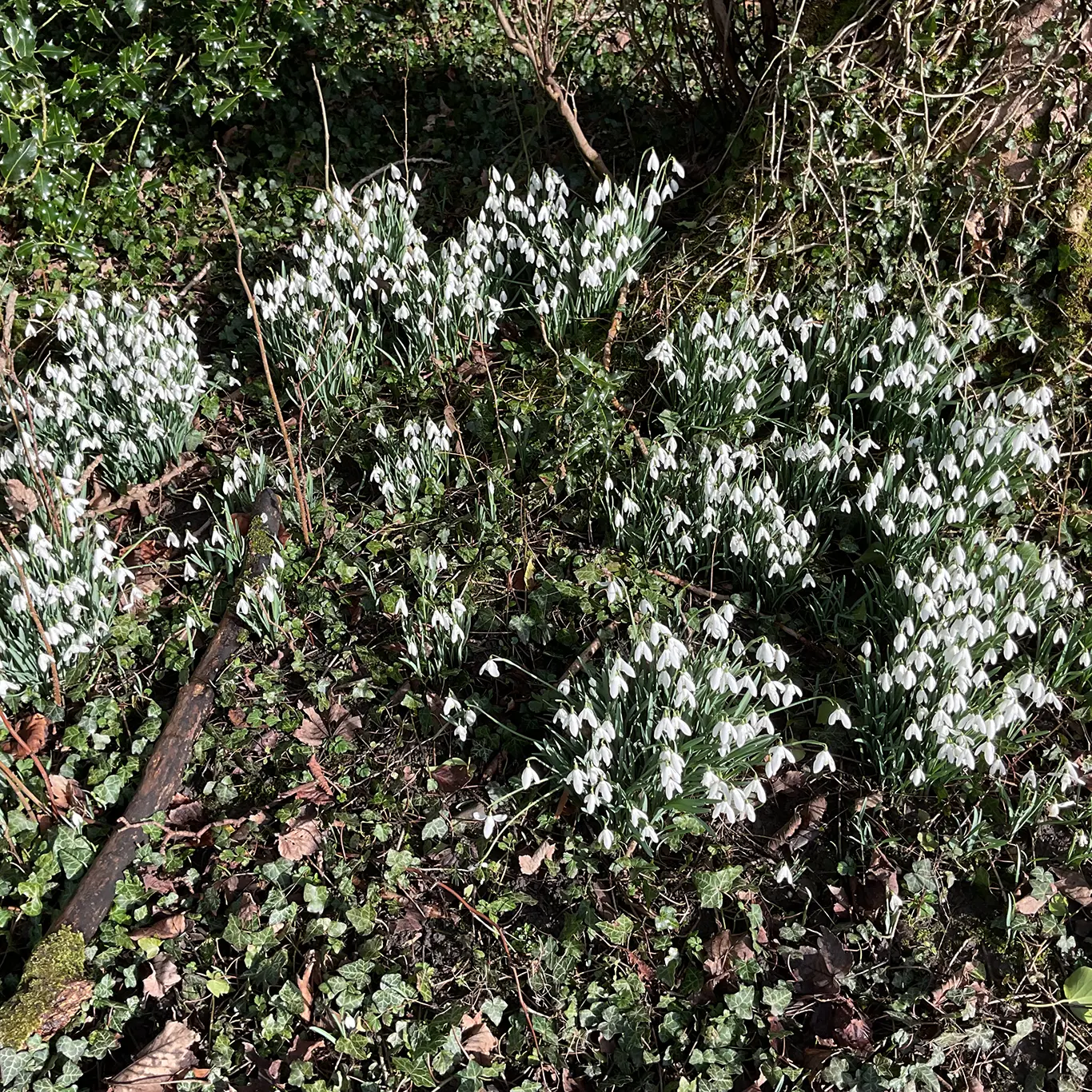
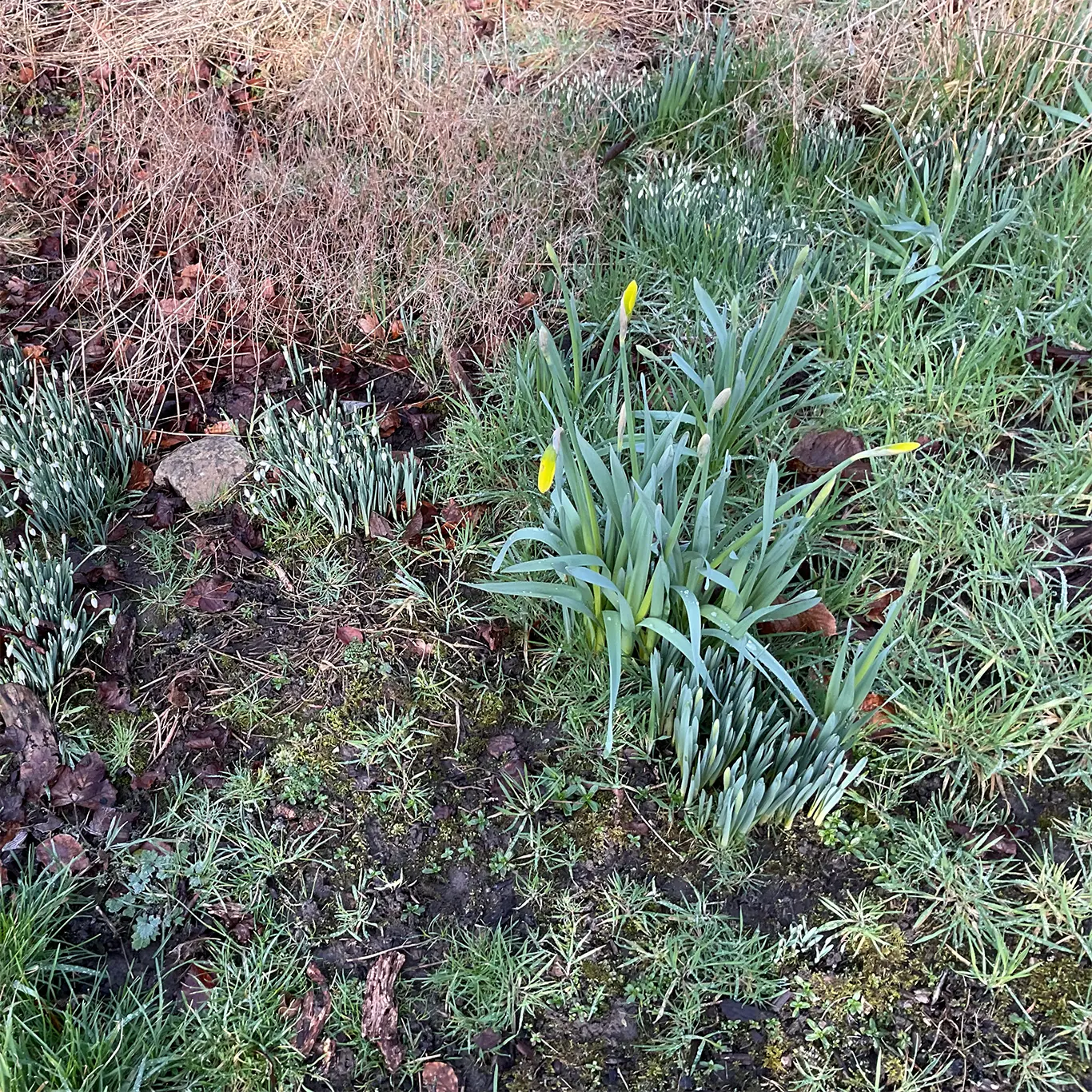
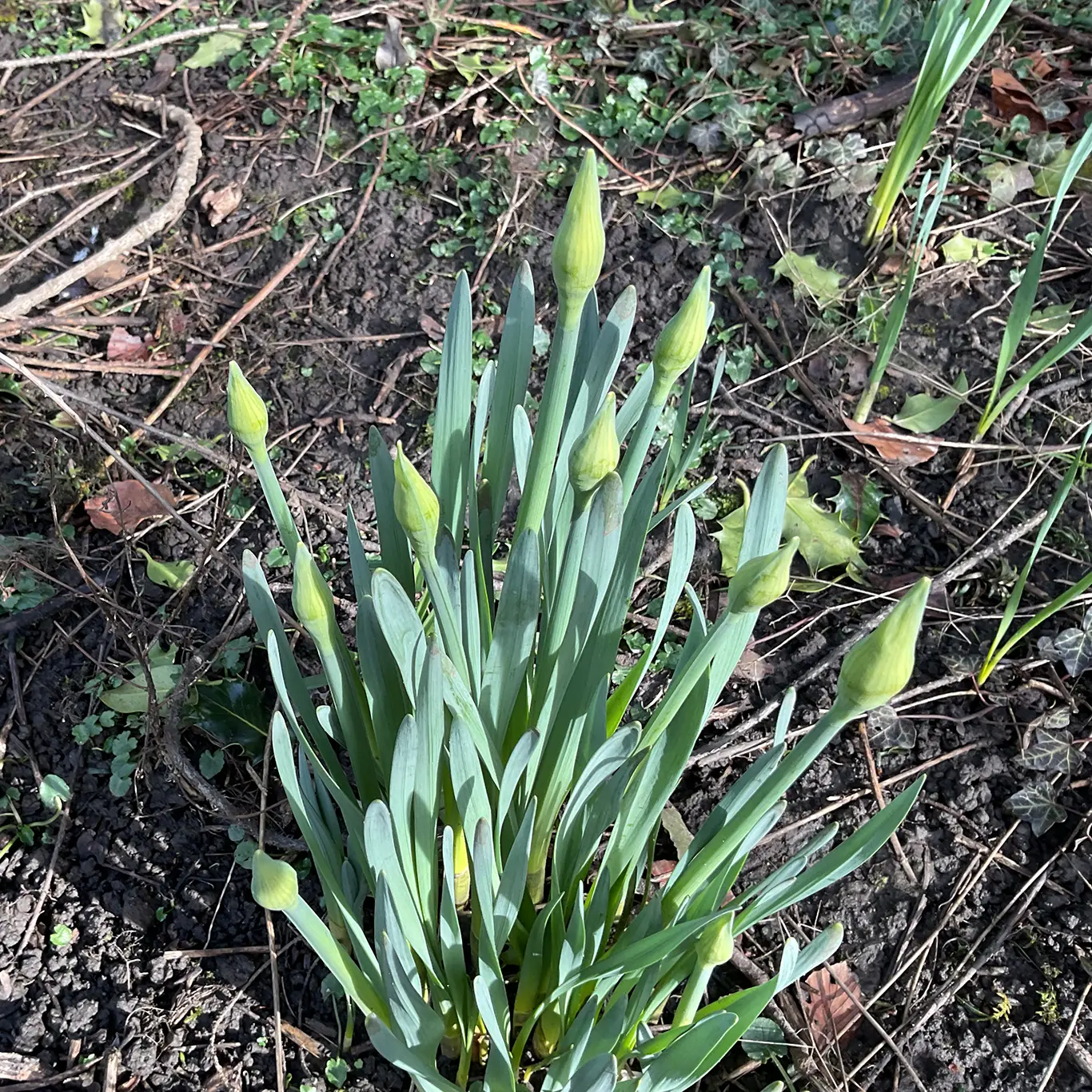
As some of the snowdrops start to fade, the daffodils push up.
And begin to open.
Hazel catkins hang almost magically from their twigs.
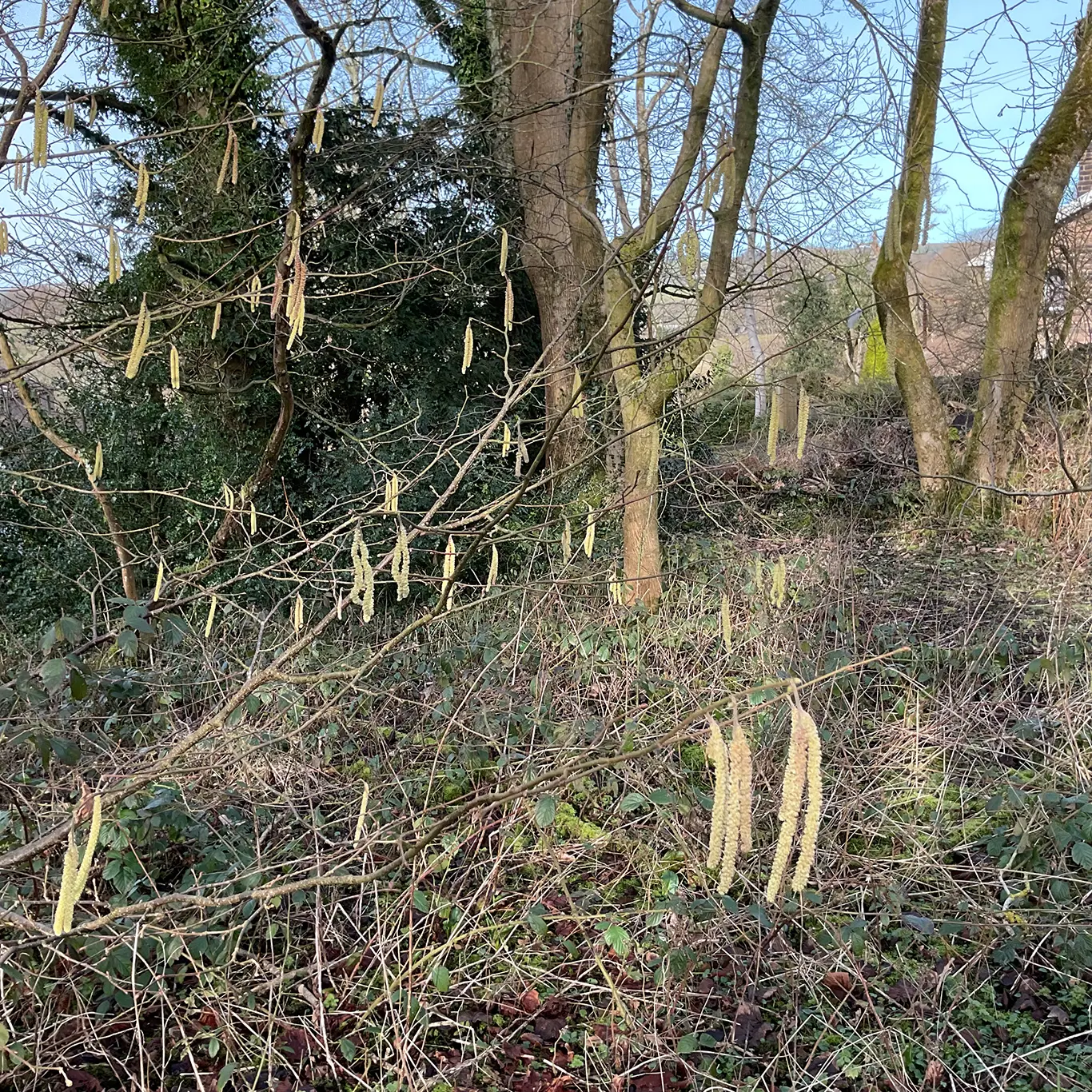
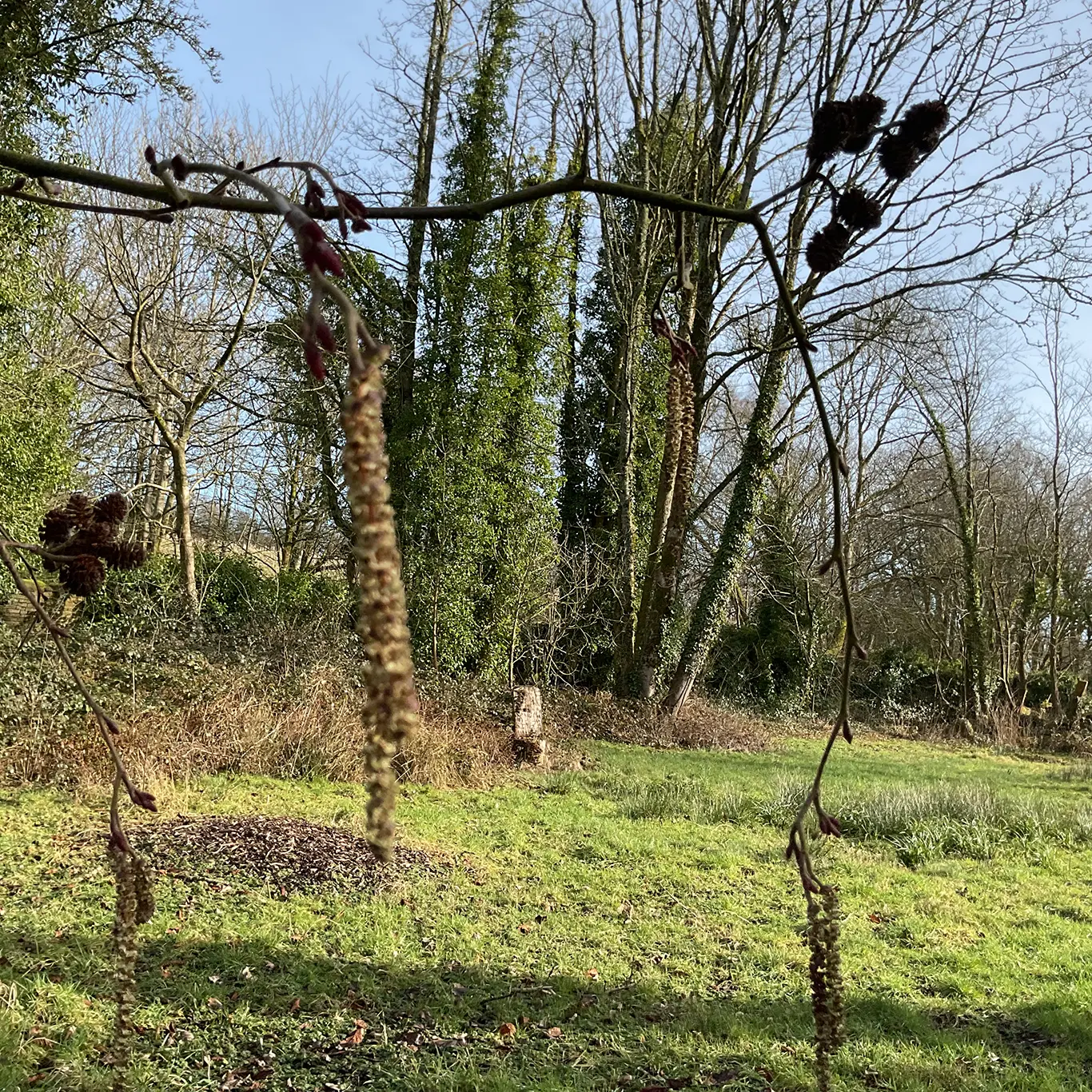
On the woodland edge, the alder tree also displays its catkins. There are two kinds – the male catkins on the left and the female catkins, which are small cones, on the right.
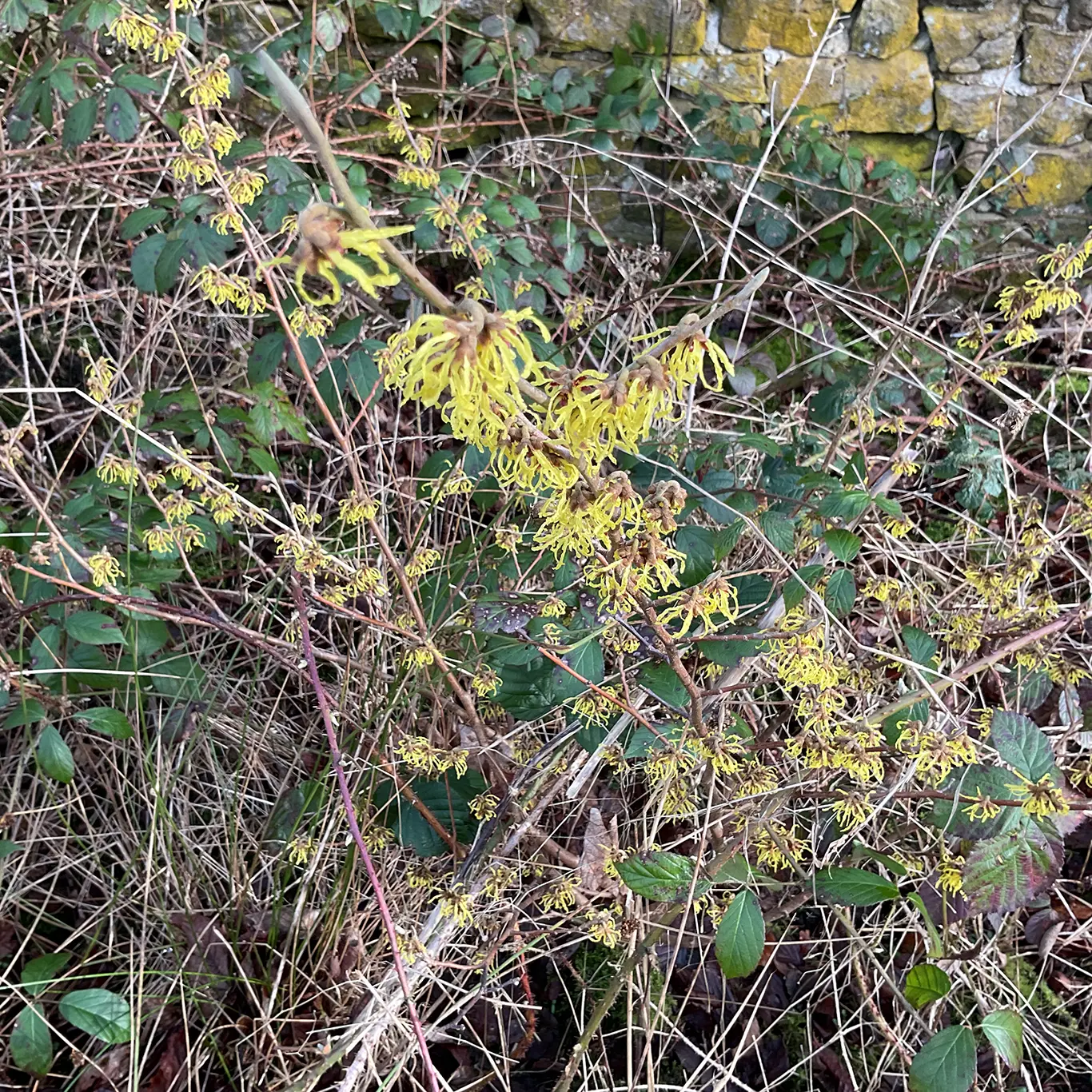
In a tangle of brambles that are still without leaves, the witch hazel sends out its yellow, spider-like flowers.
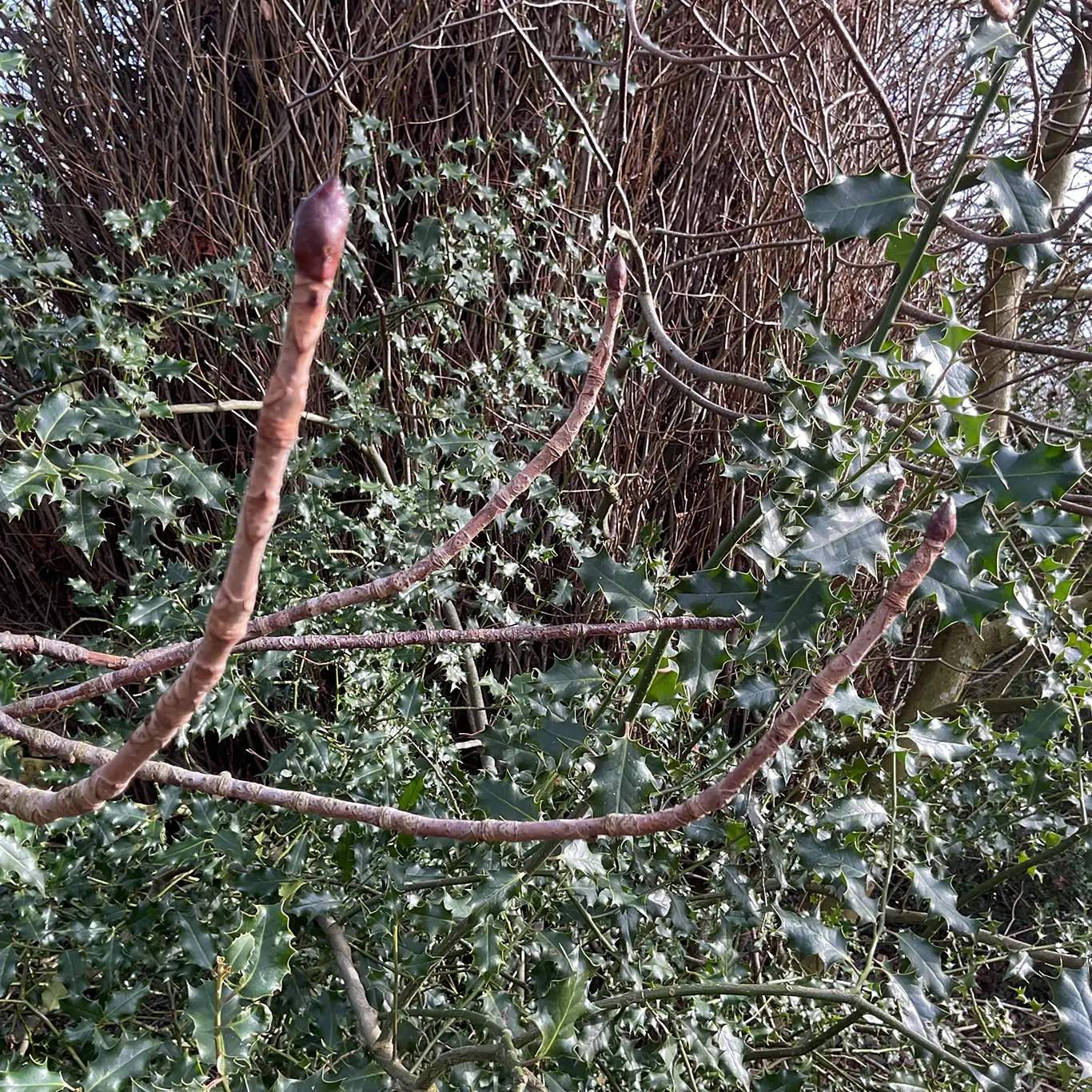
Close by, a tall horse chestnut displays its sticky buds in the sunshine, standing in front of a holly and a neighbouring lime tree.
Below the trees, these wood pigeon feathers suggest a sparrowhawk kill.
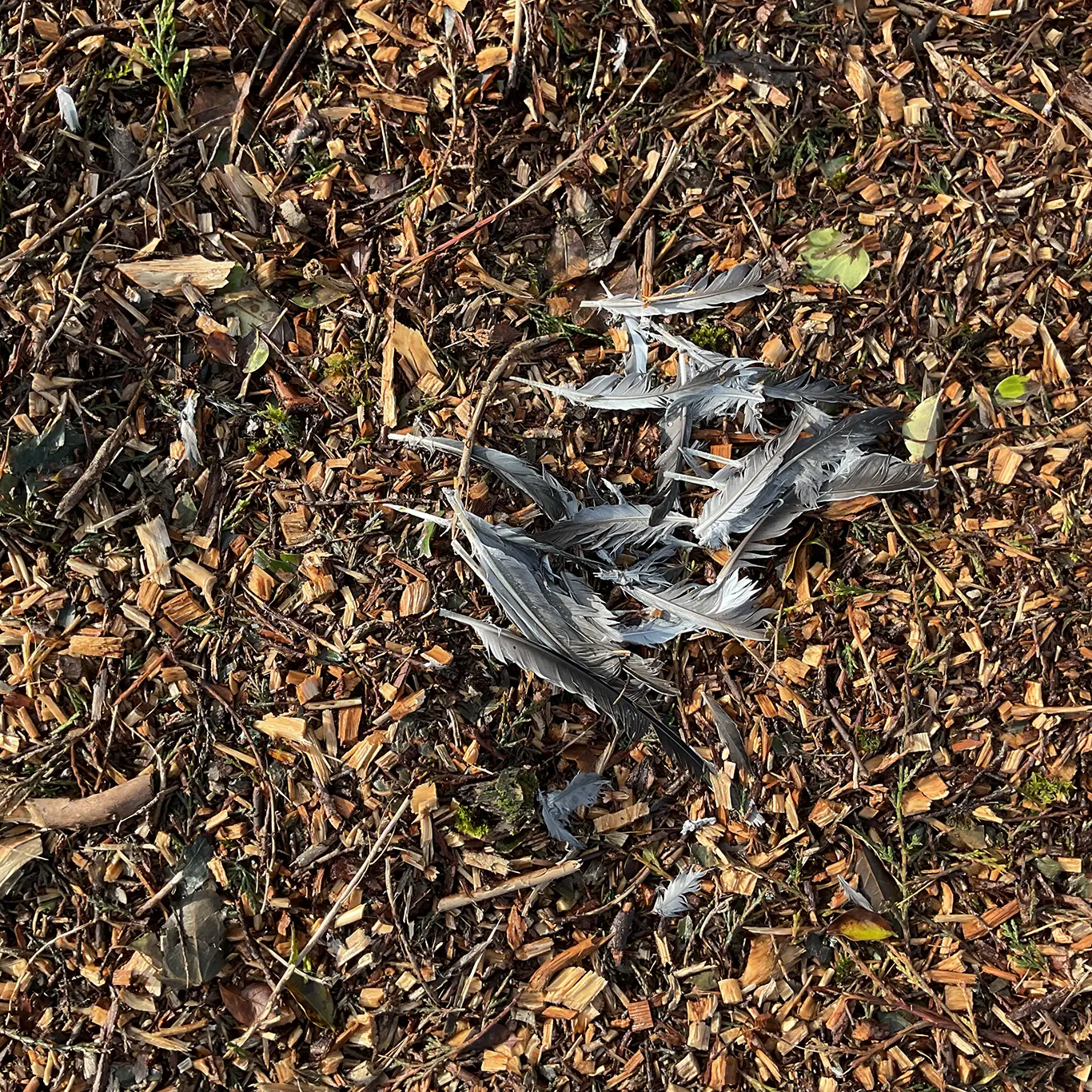
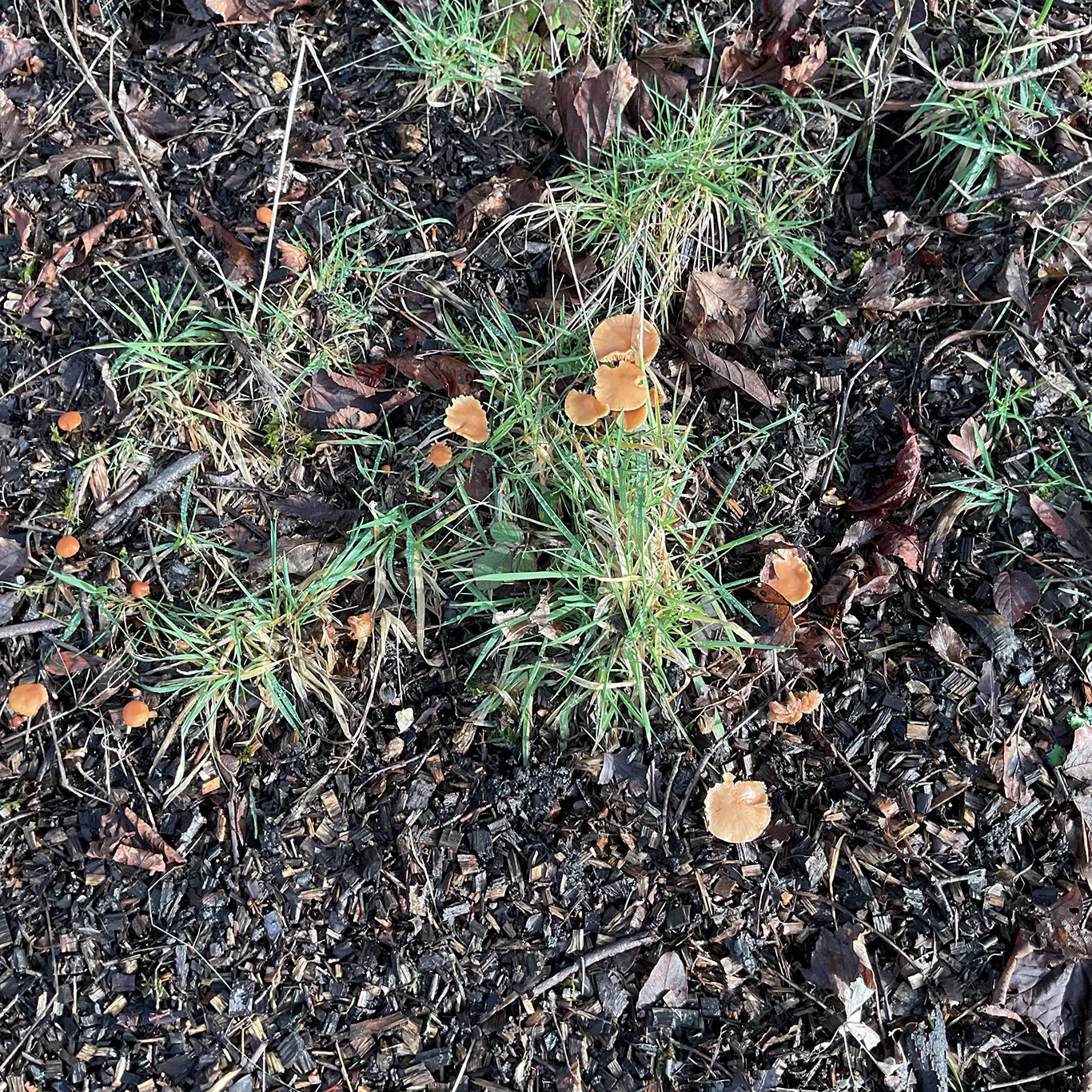
Whatever else remains of the bird elsewhere, it will enter the soil and be broken down by fungi like these on the path, providing nourishment for the plants on the patch.
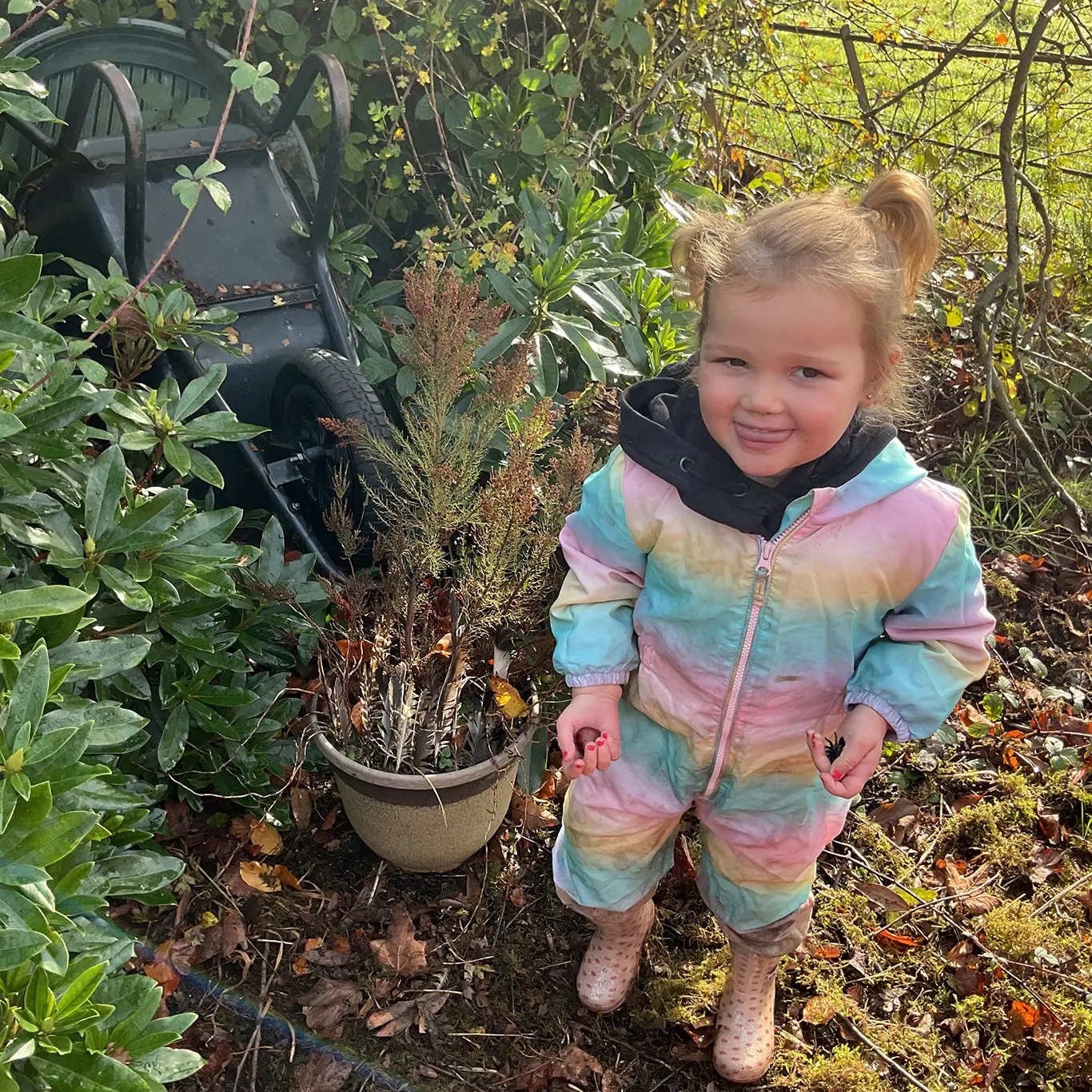
I also suspect that on Brea’s next visit to the patch, she will want to add a feather or two to her collection in her curiosity bucket.
Have a look…

Dip into the Archive
Last year, we made four videos about The Patch on the Planet. They were filmed by our drone pilot, Martin, following the flight paths I had mapped out for him.
Visit Patch on the Planet. And begin with the early springtime video. You may also like to download the free Stop and Chat Sheet, which explains what you are seeing as the drone makes its journey around the patch.
