Last year we began exploring habitats with the Outdoor Scientists Backpack.
As an experienced educator who has spent decades helping children connect with the natural world, I've discovered that some of
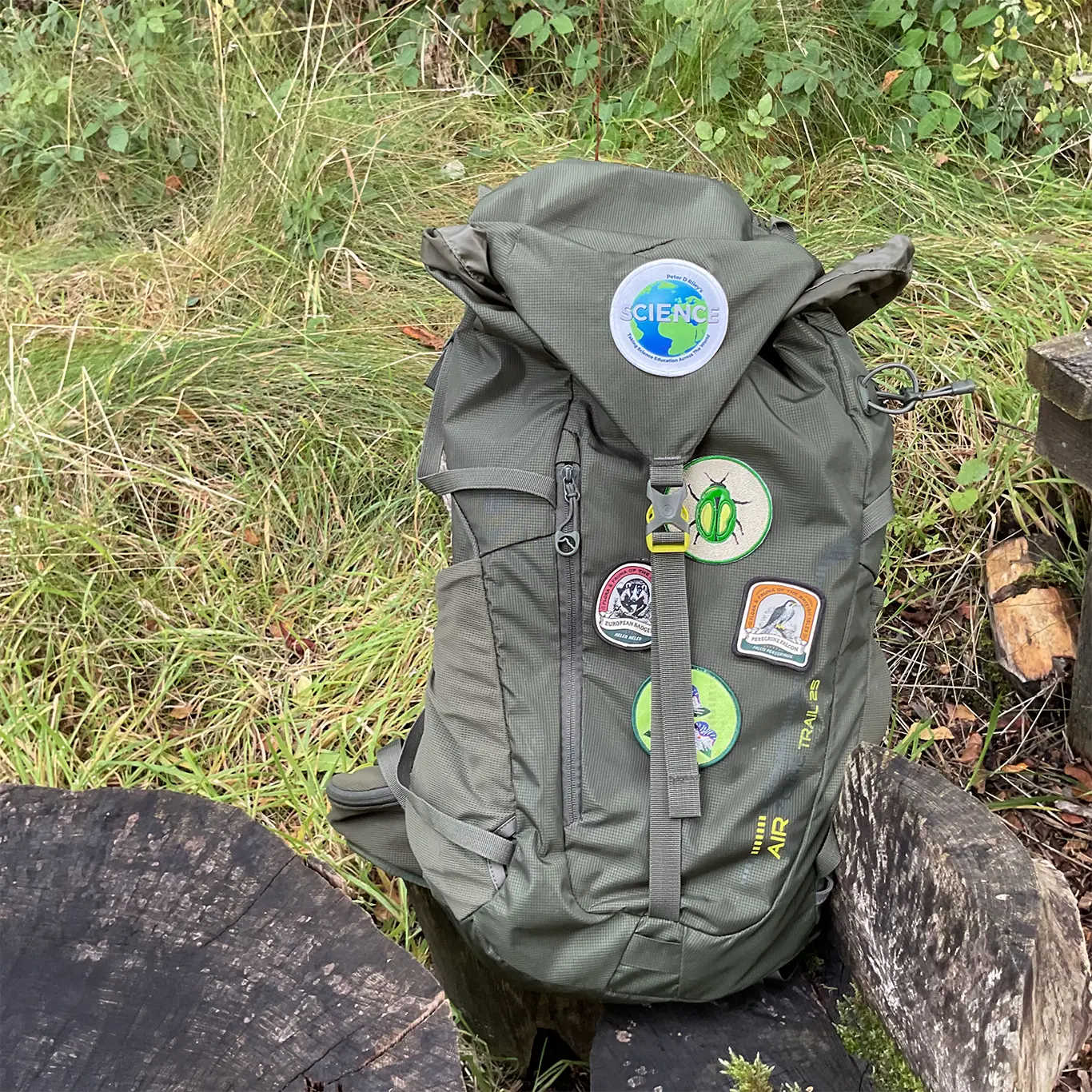
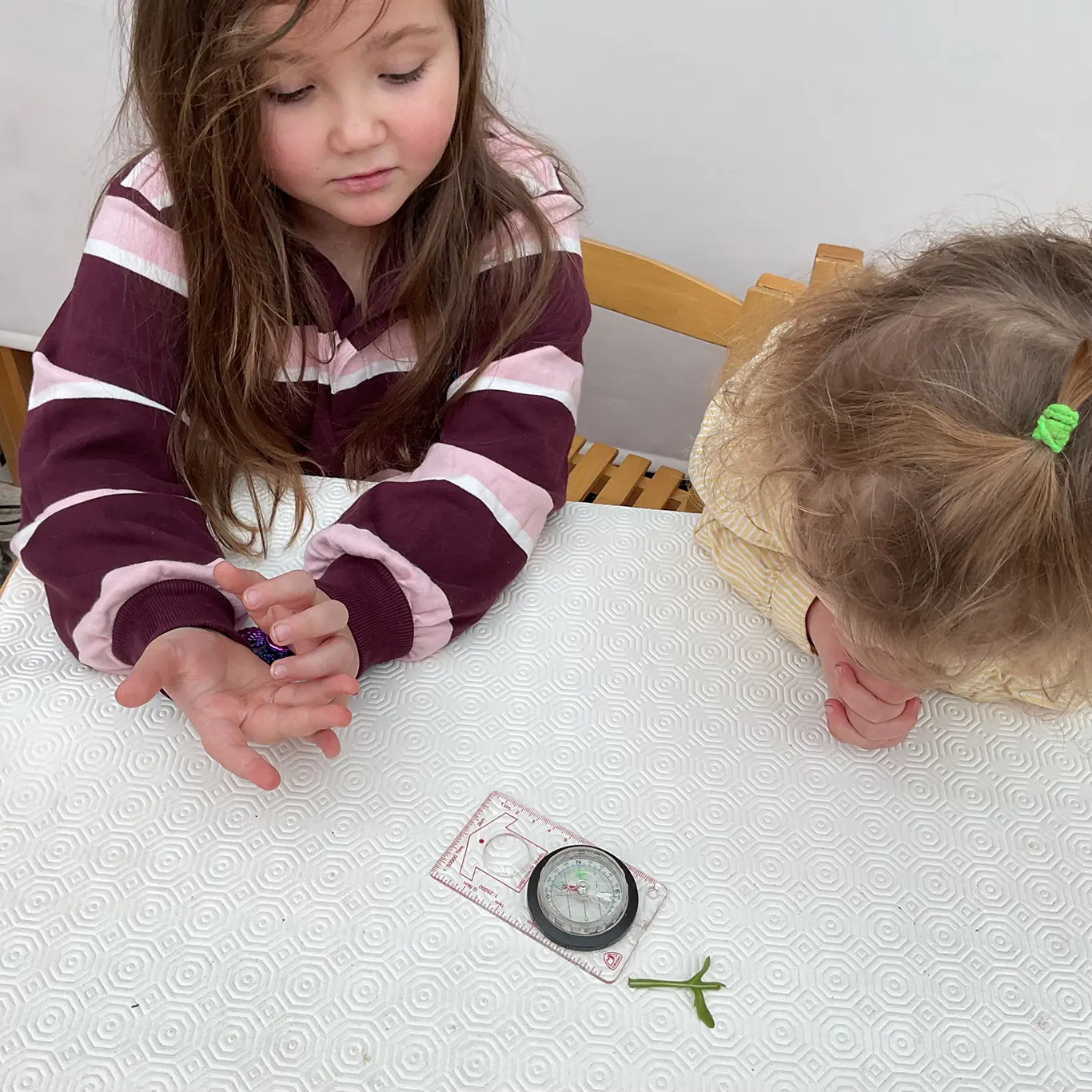
As I was preparing the pack for this year, the girls noticed a compass and wanted to know about it. They already knew about fridge magnets, so when I said that the compass needle was a magnet, they wanted to know more.
I explained that when you set a compass on a flat surface, the needle always points in a certain direction that we call north and south.
The girls wanted to know what would happen if they brought a fridge magnet near it…
They found that as they moved the fridge magnet around the compass, the needle moved too.
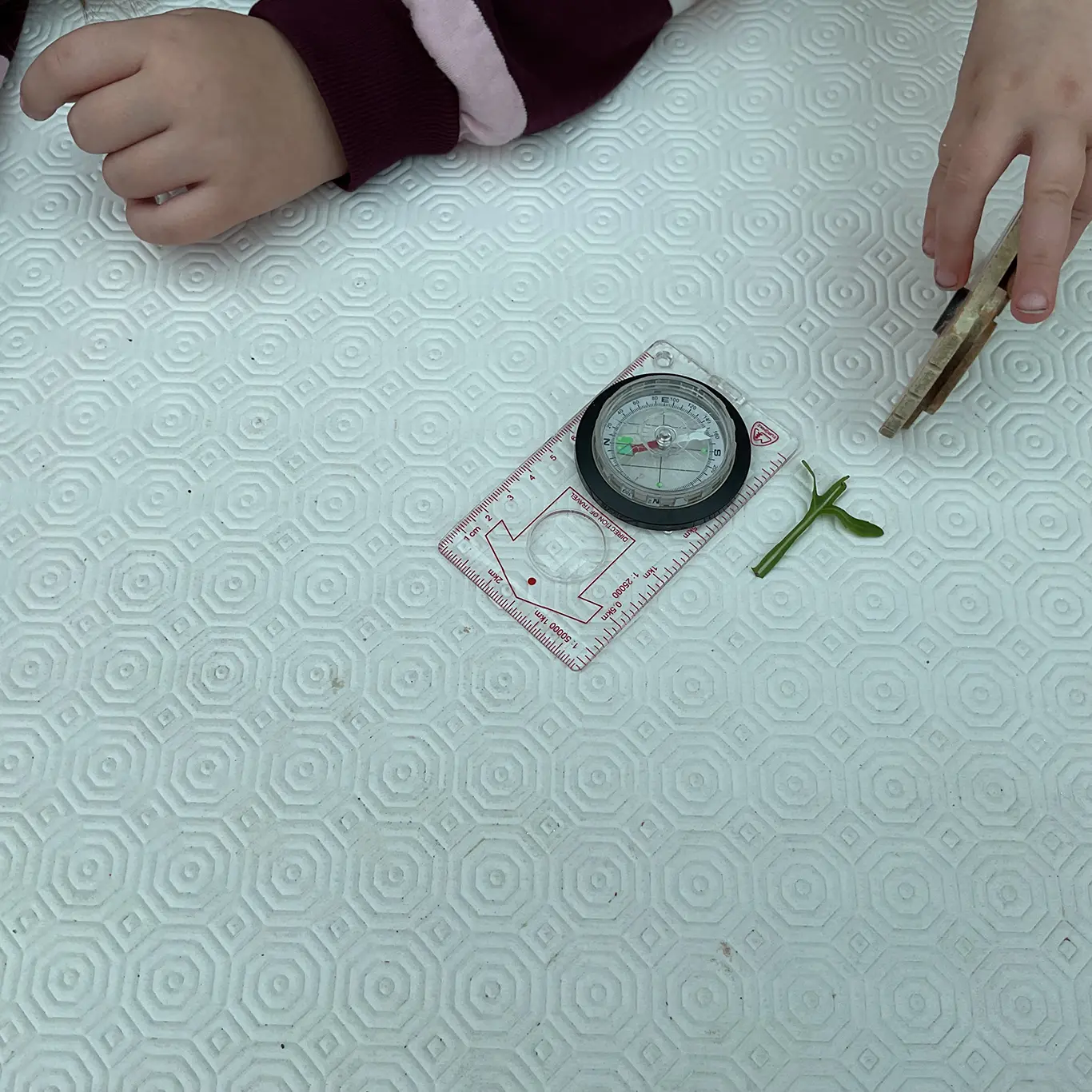
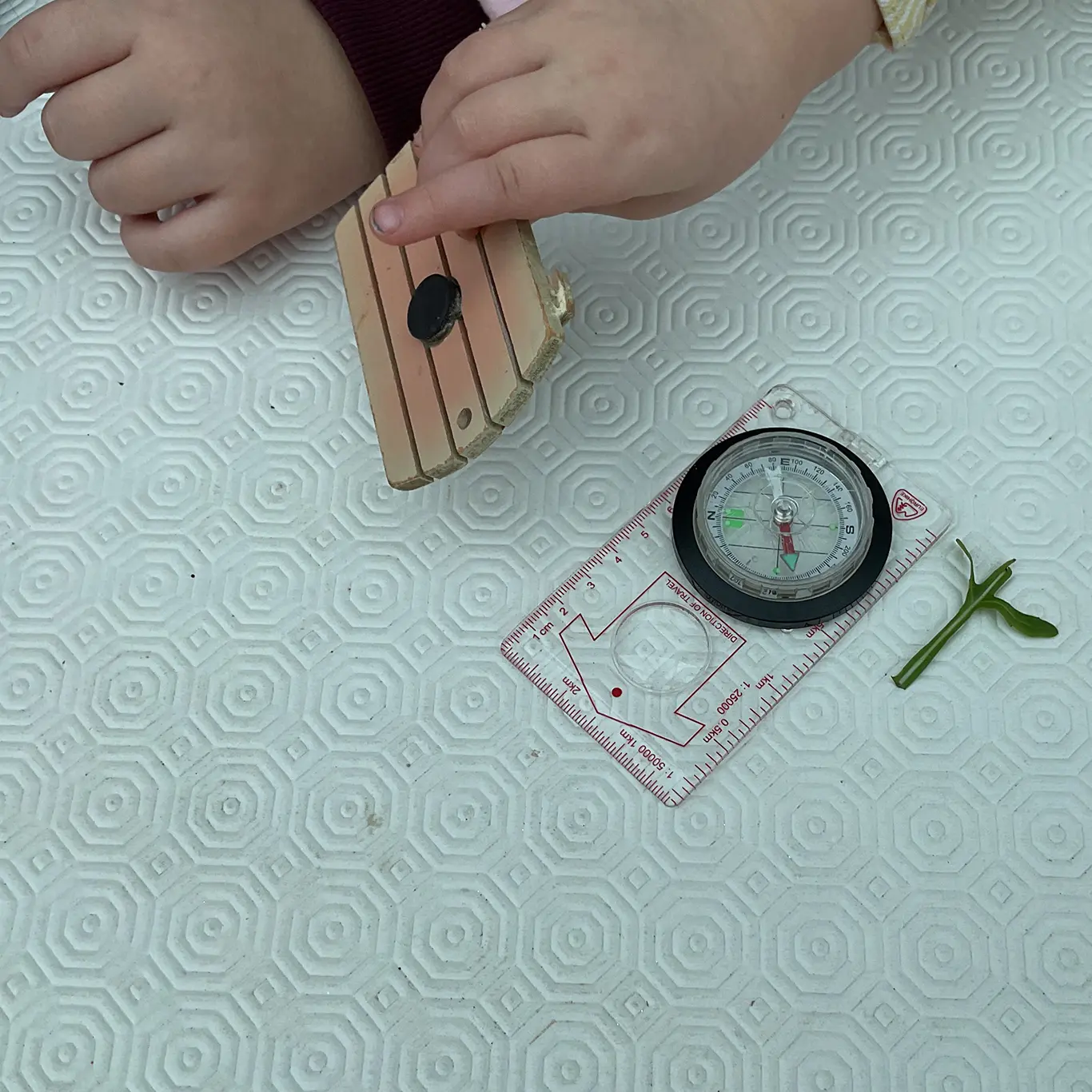
They then asked why the compass points north and south when it is left alone. I reminded them of the time they built their planets and explained that when the Earth formed, the very centre developed into a ball of metals. This makes the Earth behave as though it has a giant magnet inside it.
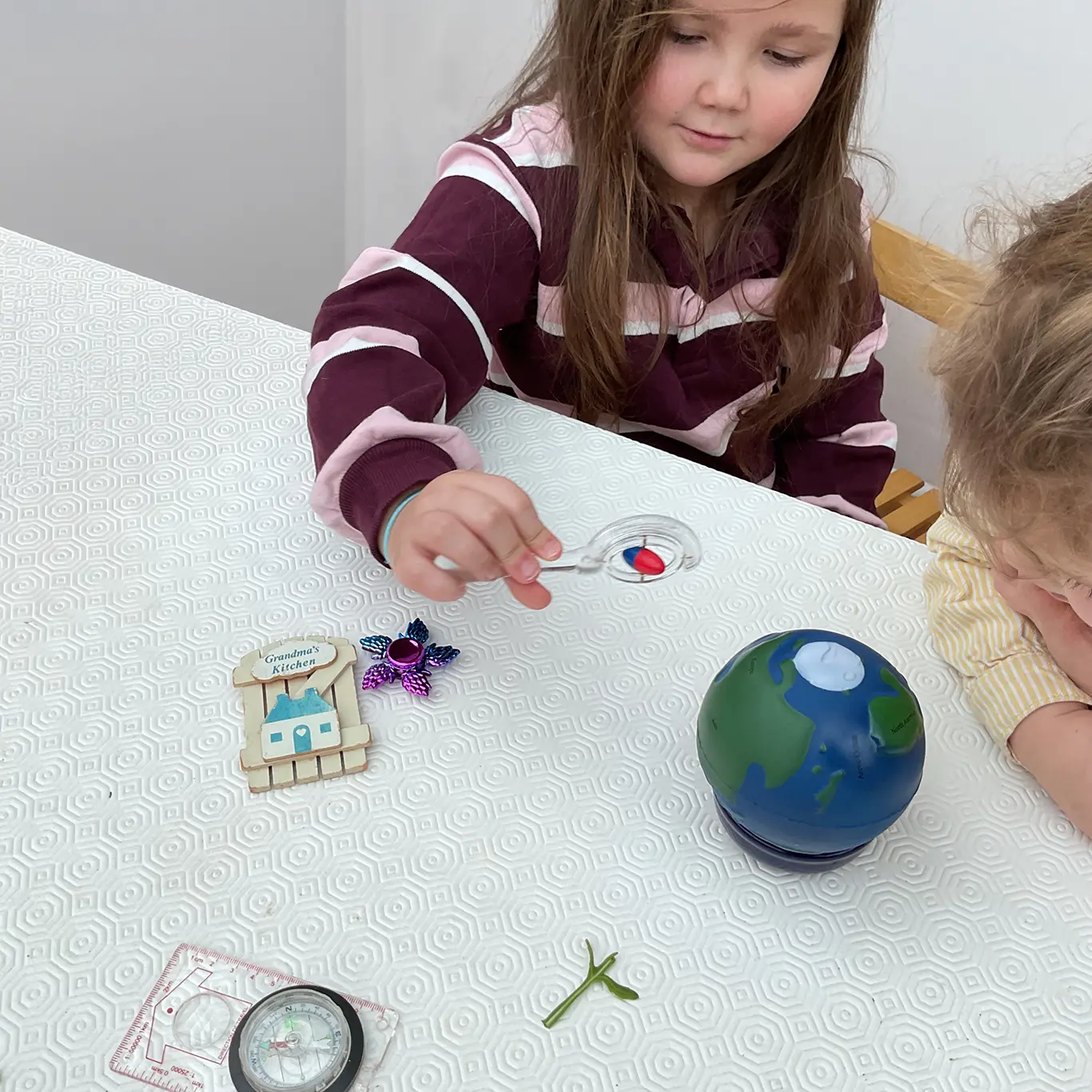
For a science show that I occasionally do, I have a model Earth with a magnet inside it, and I let Hattie test it with a small magnet.
As Hattie moved the small magnet towards the Earth, the magnet began to move. It had entered the planet’s magnetic force field. This is the region around the planet that influences the space around it.
Hattie moved the small magnet towards the top of the Earth (its north pole) and the magnet began to dip down.
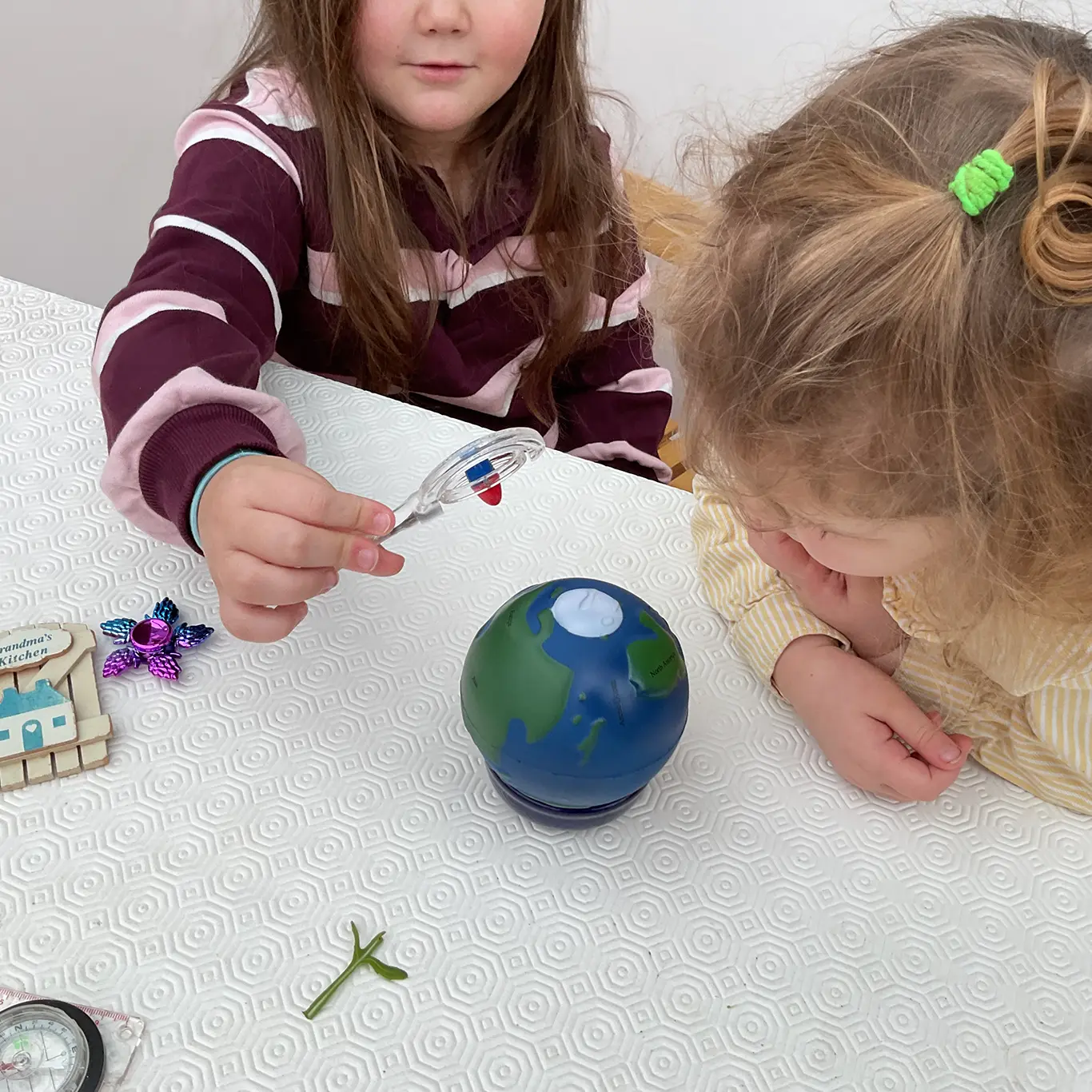
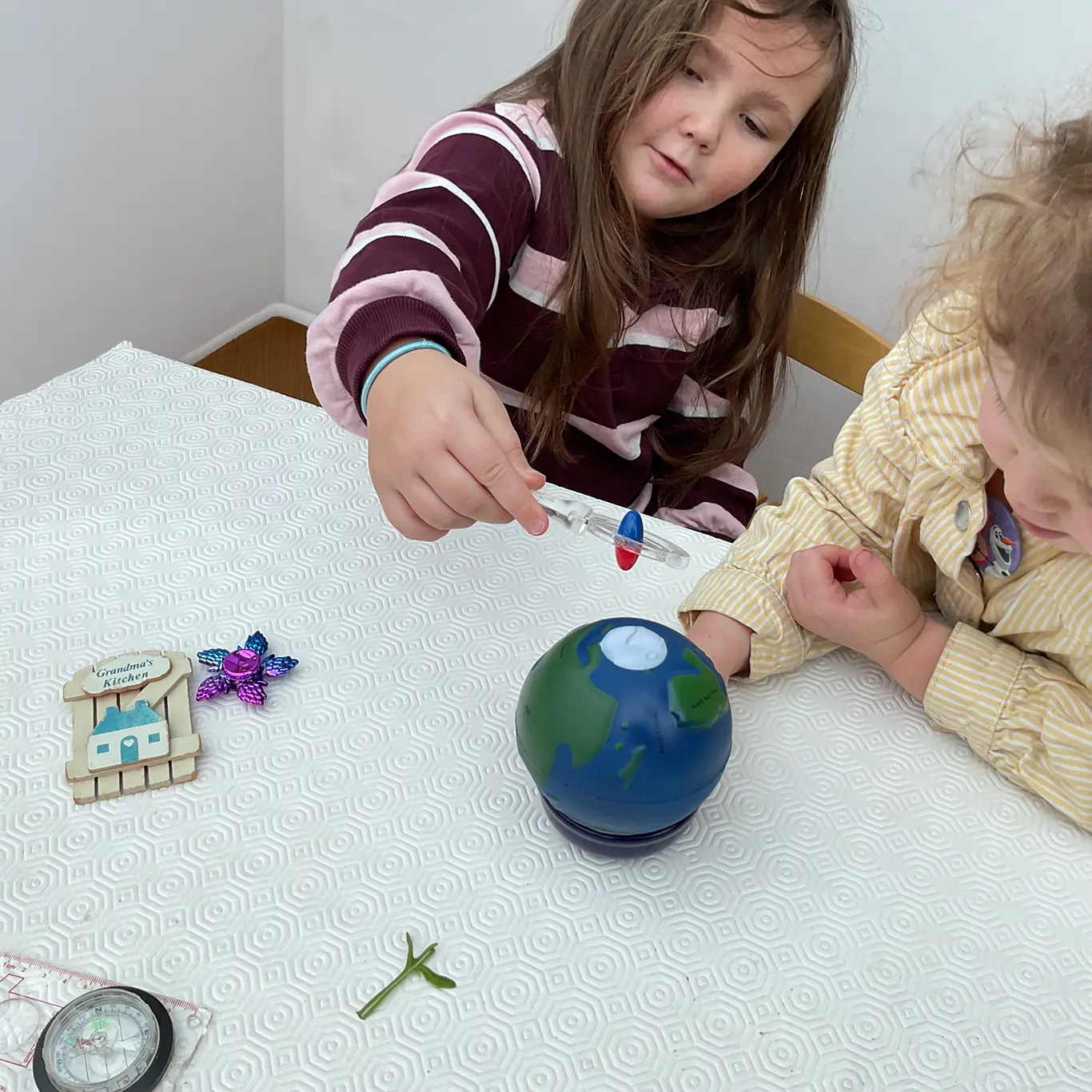
When her magnet reached the top of the planet, it dipped straight down, showing that this magnetic force field surrounds the whole planet.
Almost everyone knows about the ozone layer and its importance in keeping out harmful rays from the Sun. The Earth’s magnetic force field in space beyond the planet also protects us by deflecting other harmful radiation from the Sun.
Far above the blue sky over our patch on the planet, this magnetic force field – also called the magnetosphere – helps keep our world safe and allows life to flourish.
Incidentally, we use the compass to find the wind direction when making a weather record for the patch.