
Curious Autumn: From Nature Walk to Nature Table (Part 1)
Science doesn’t begin in a laboratory – it begins with curiosity. And curiosity starts when children learn to really see what’s around them.
As a science educator with over four decades of experience, I’ve watched countless children transform from passive observers to excited naturalists, simply by collecting treasures from an autumn walk. The fallen gifts of autumn – conkers, acorns, pine cones, and moulted feathers – are perfect catalysts for developing the observational skills that underpin all scientific thinking.
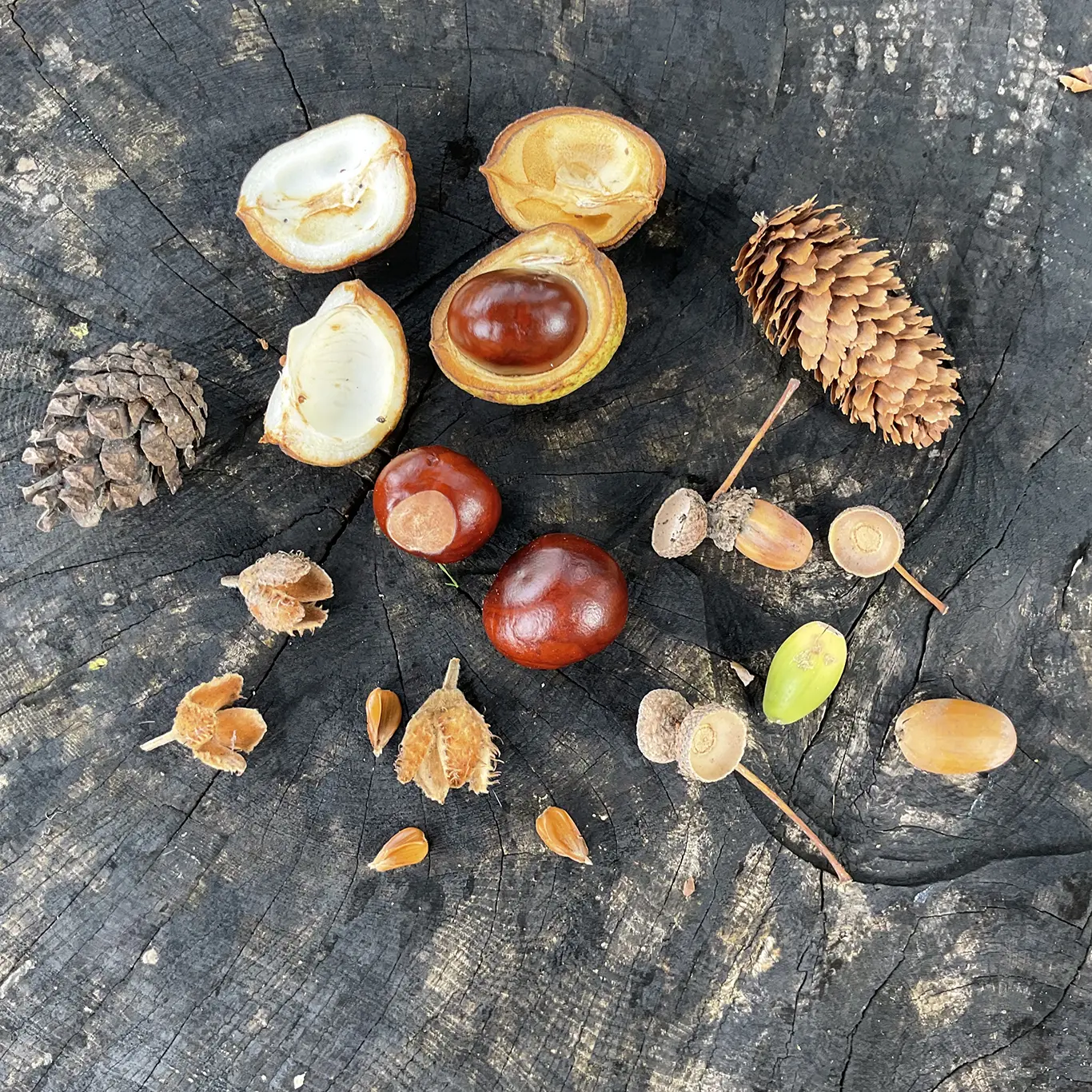
Building Your Autumn Nature Table
In this collection, you’ll find:
- Centre: Horsechestnut seeds (conkers) still nestled in their spiky cases
- Right: A spruce cone alongside acorns, both in and out of their cups
- Left: A pine cone with beech mast fruit cases and seeds
This simple display immediately teaches children an important distinction: the difference between a pine cone and an acorn. It sounds basic, but you’d be surprised how many adults confuse them!
Alternative Display Ideas
Not every child wants to create a traditional nature table, and that’s absolutely fine. These items work beautifully stored in a curiosity box for ongoing investigation (you can see examples in my Curiosity Box series).
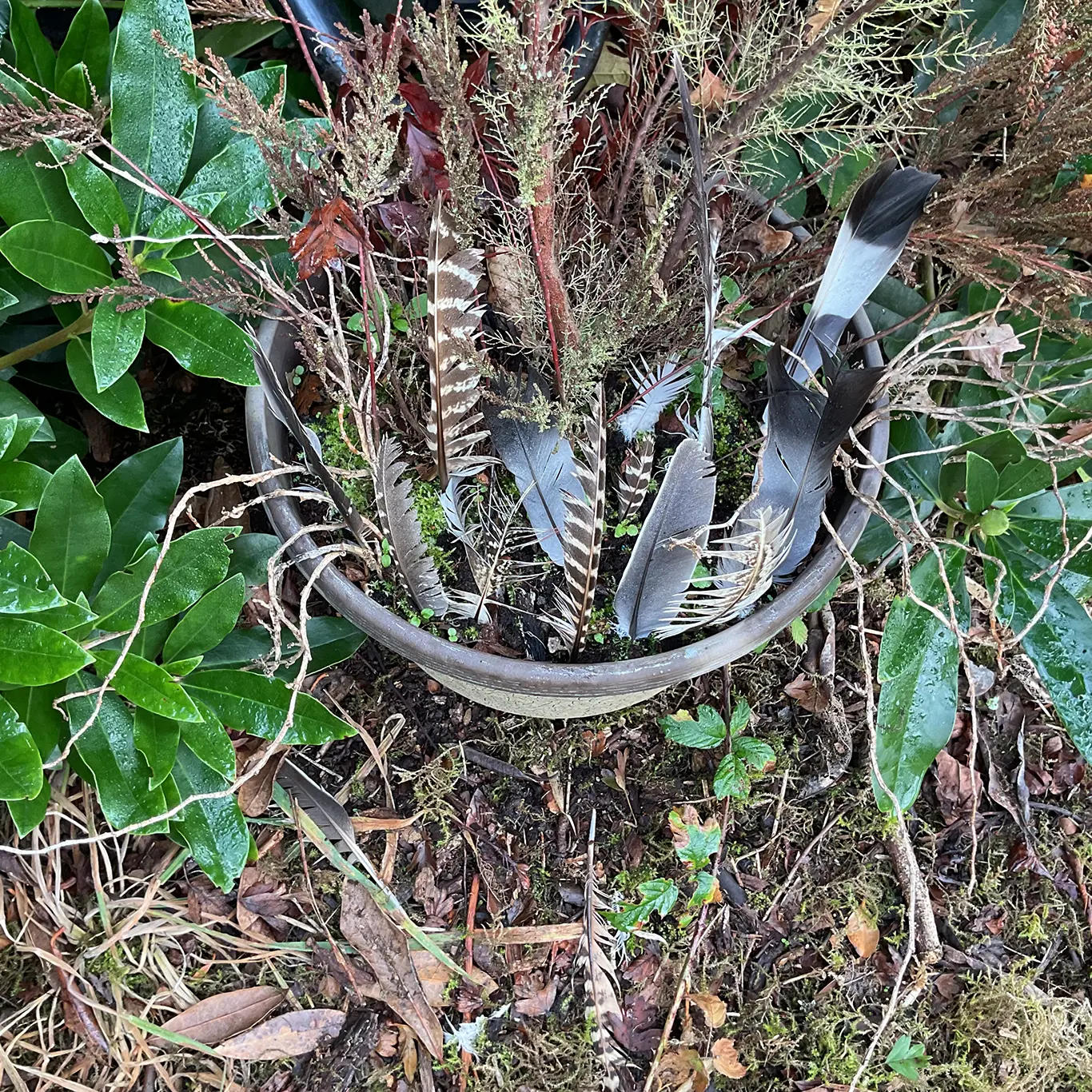
My great-granddaughter Brea—one of the young rockhounds from my recent geology blog post—had her own ideas. She wasn’t interested in a nature table or curiosity box. Instead, she displayed her autumn finds in a plant pot.
Brilliant critical thinking, Brea! Her collection features moulted feathers she gathered whilst walking around the garden: blackbird, wood pigeon, tawny owl, and pheasant feathers, each with distinctive patterns and colours.
Why This Matters
These simple autumn activities address what Richard Louv called “nature-deficit disorder”—the growing disconnect between children and the natural world. Whether you’re a teacher planning outdoor learning sessions or a parent looking for weekend activities, autumn nature walks offer:
- Observational skills development – the foundation of scientific enquiry
- Sensory engagement – touching, seeing, and categorising natural objects
- Curiosity sparking – each object raises questions about trees, animals, and seasons
- Screen-free learning – genuine engagement with the physical world
Perfect for Key Stage 1 and 2 science curricula, homeschooling nature studies, or simply enriching your child’s connection to the seasons.
Next Time: Curious Autumn Part 2
In the next post, we’ll explore autumn’s most colourful treasures—fallen leaves. I’ll show you how to turn leaf collecting into proper scientific investigation.
