
I have been writing blogs for over ten years. Many are now in the archives, and this present-day blog also gives you an opportunity to dip into them and find out more.
In the last few blogs, the girls have been looking at objects in the sky. Now we are looking at objects that come out of the sky – raindrops.
The girls wondered about measuring the rain, and I suggested they use some everyday equipment to find out.
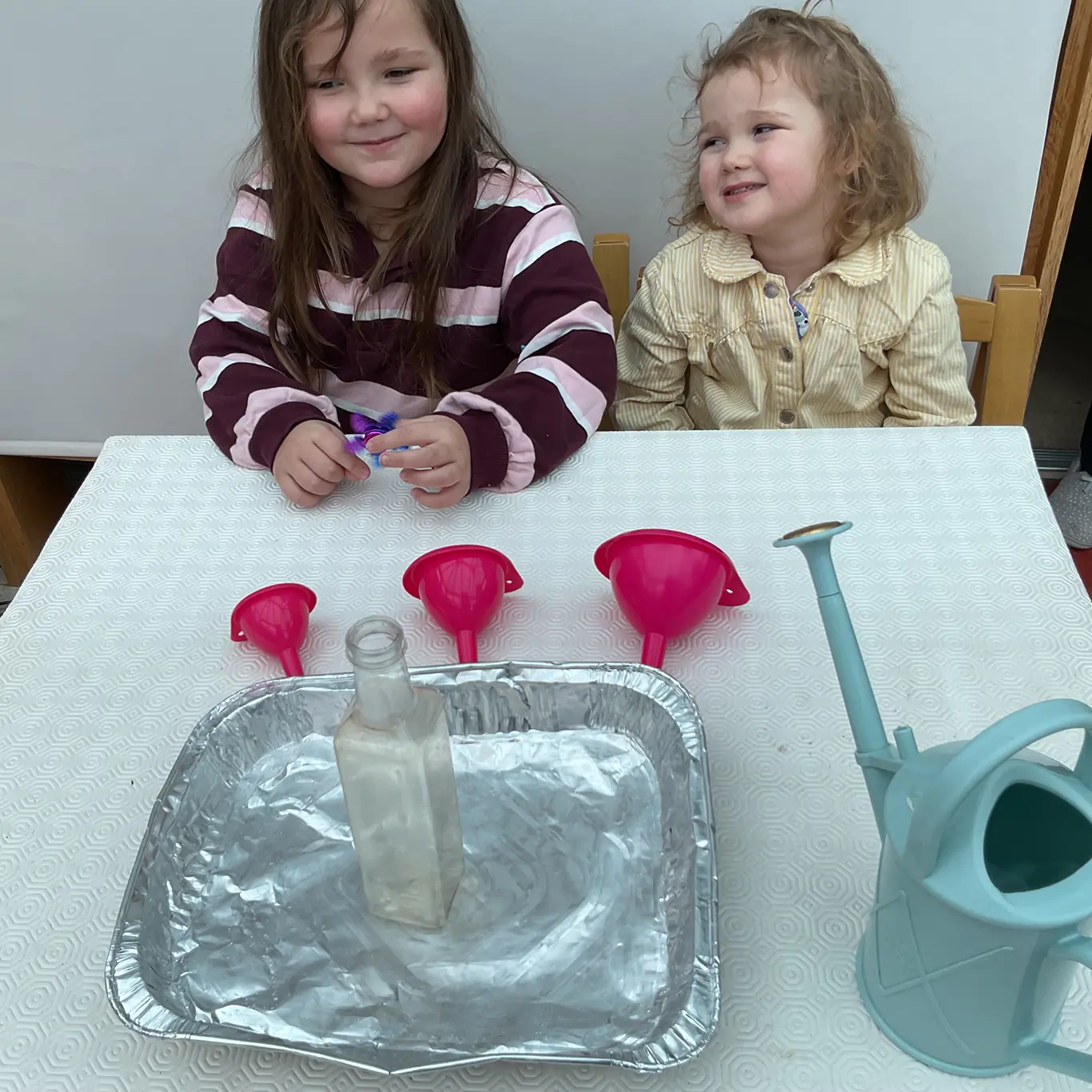
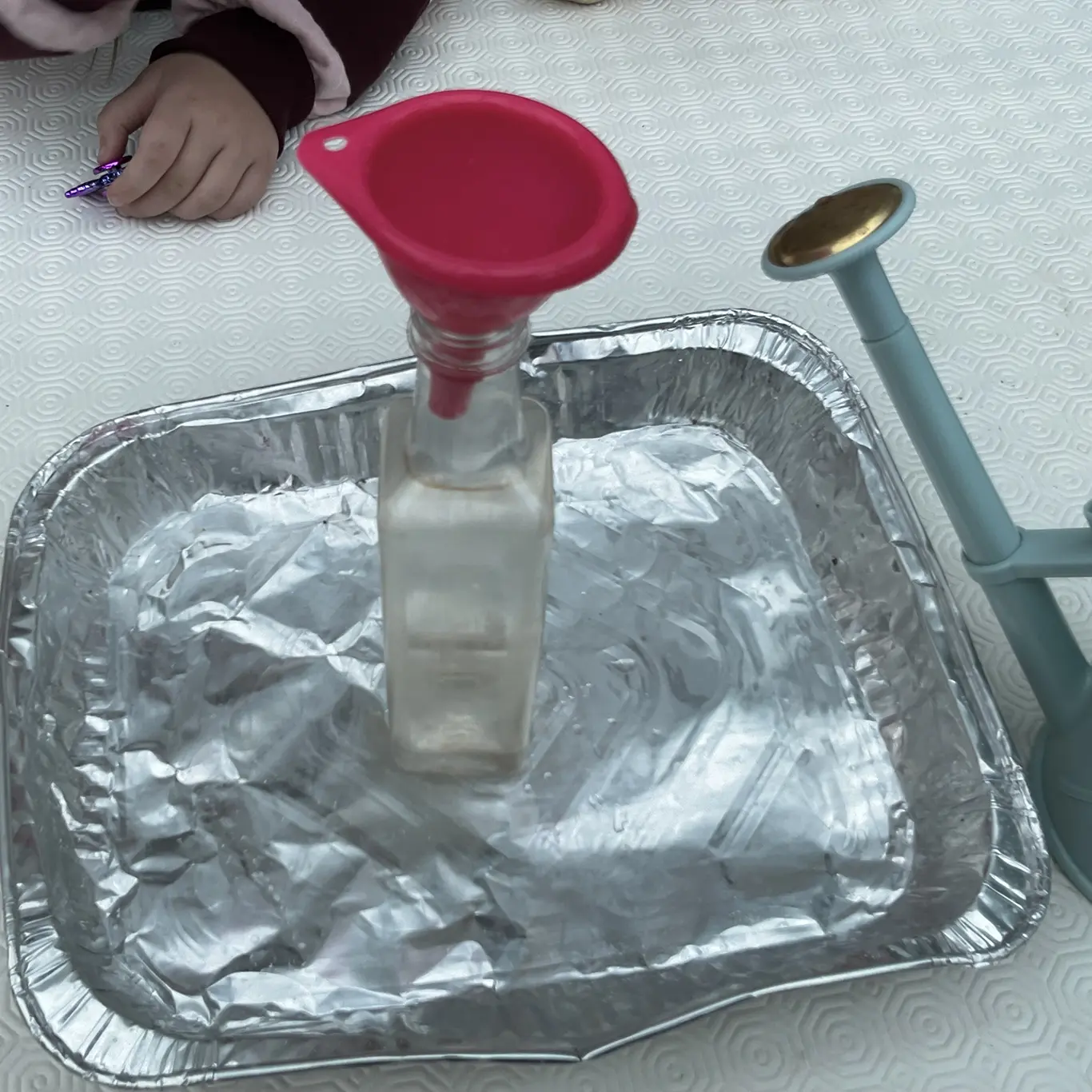
This activity got the girls thinking about how they could use a funnel and a bottle to catch rain. I pointed out that the funnel could catch more water than the top of the bottle because it was wider, and they soon came up with a rain-catching plan.
The girls looked at the three funnels and decided that the biggest funnel would catch the most water and the smallest would catch the least.
If the girls had been older, I would have suggested that this idea is what scientists call a hypothesis, and that it can be tested by experiment. As it was, I let them insert each funnel in turn into the bottle and “water” it with the watering can for the count of ten.
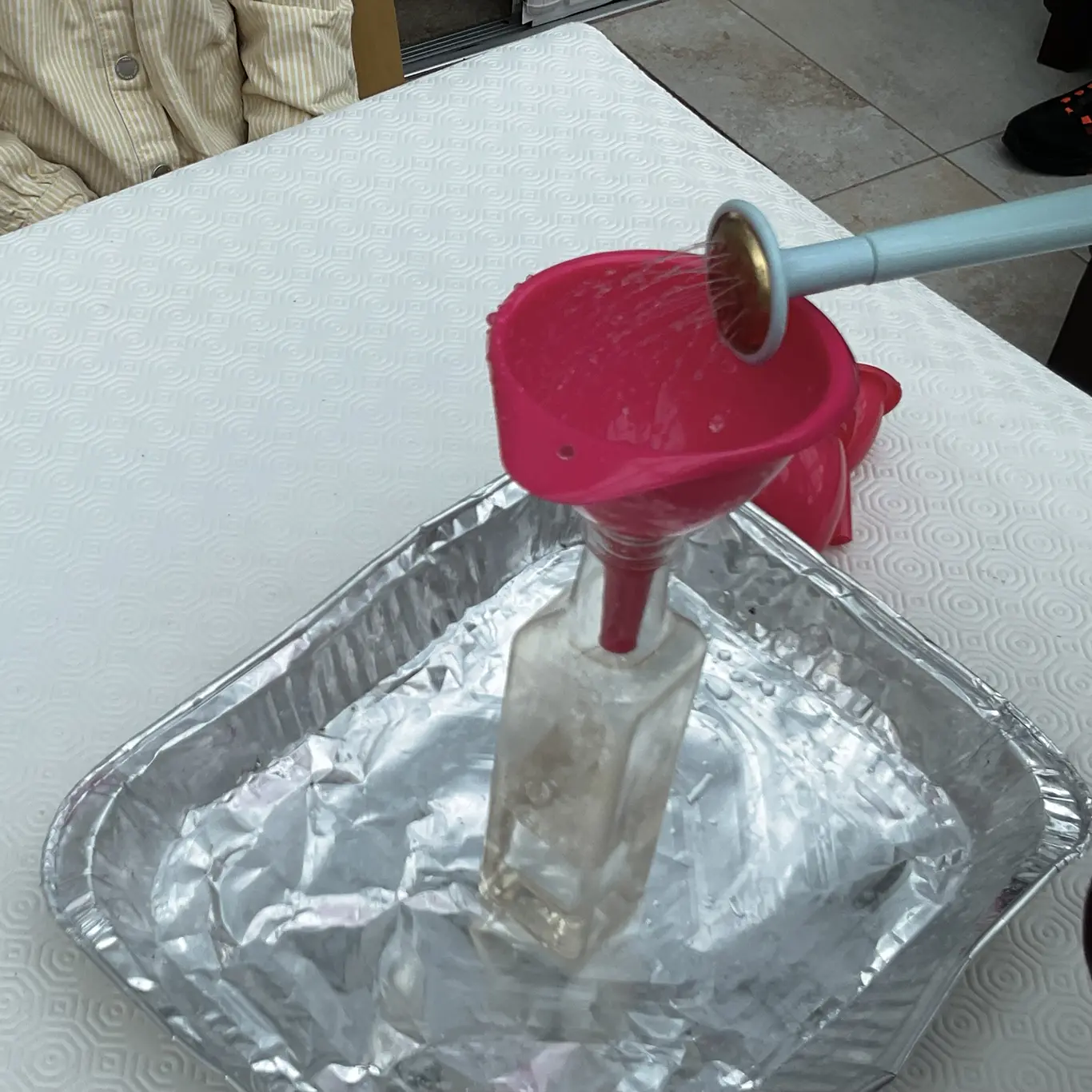
Sure enough, they discovered that the largest funnel collected the most water and decided it was the one to use in the rain gauge.
We compared the different amounts of water collected simply by looking at the levels in the bottle. I suggested that after the rain gauge had collected real rain outside, they could photograph the level of water in the bottle as a record.
When they are older and return to this activity, they will be able to make a scale on the side of the bottle and develop more advanced measuring skills.
Dip into the Archive
Over ten years ago I produced some blogs on the history of science, based on places I visited. I began with a local scientist who invented the rain gauge. You can read about him here:
For my occasional series of "Science is nearer than you think" I went three miles from home to Towneley
I followed this up with the girls’ Auntie Pippa making a rain gauge. She makes a different kind of rain gauge, and you can see what she did here:
In my last post I described visiting Towneley hall and seeing Richard Towneley's rain gauge which was built in the
