
What’s there to see on the patch in the wintertime? Not much, you might think, but you would be wrong.
Most trees are without leaves and the plants below them have died back. However, there are other plants to see – plants you probably would not look at when the leaves and flowers are back out.
I have arranged these plants and plant-like organisms in a timeline, starting with those whose ancestors first evolved on the planet over three billion years ago.
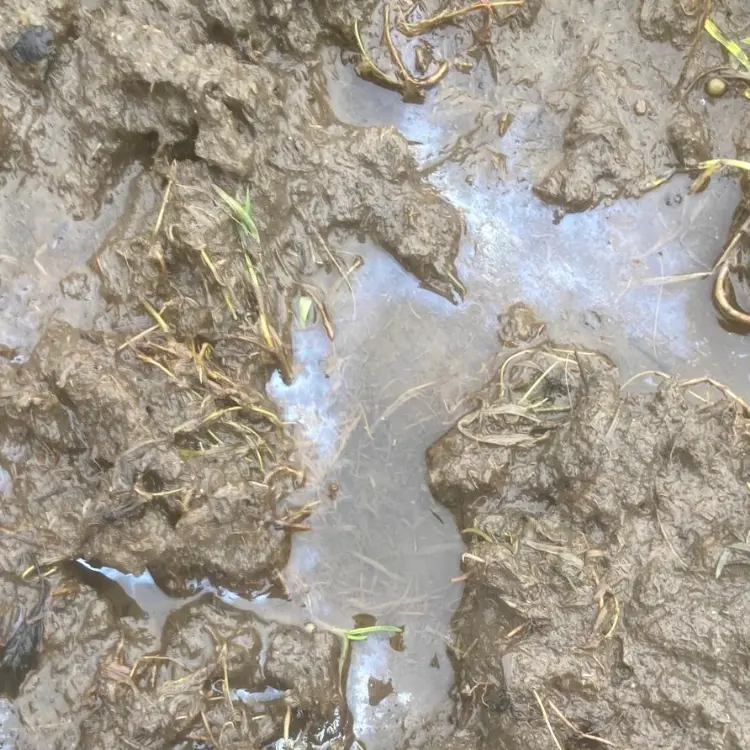
A muddy hole filled with stagnant water soon encourages the growth of blue-green algae. Their ancestors first developed on the planet up to 3.5 billion years ago.
years ago
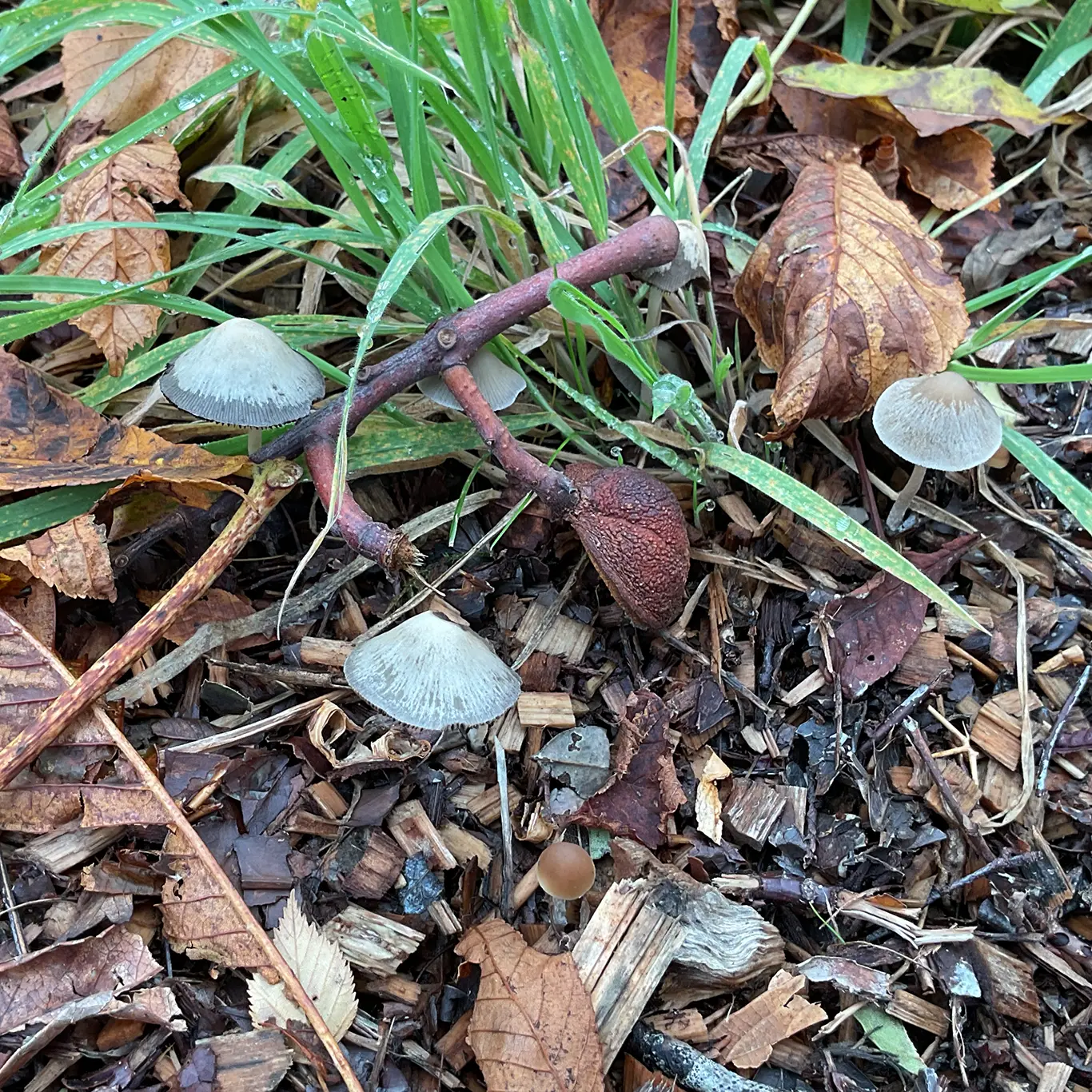
Nearly 1.5 billion years ago, the ancestors of fungi developed. Fungi are not plants, as they cannot make their own food, but they form a close relationship with some plants, as we will see a little later.
years ago
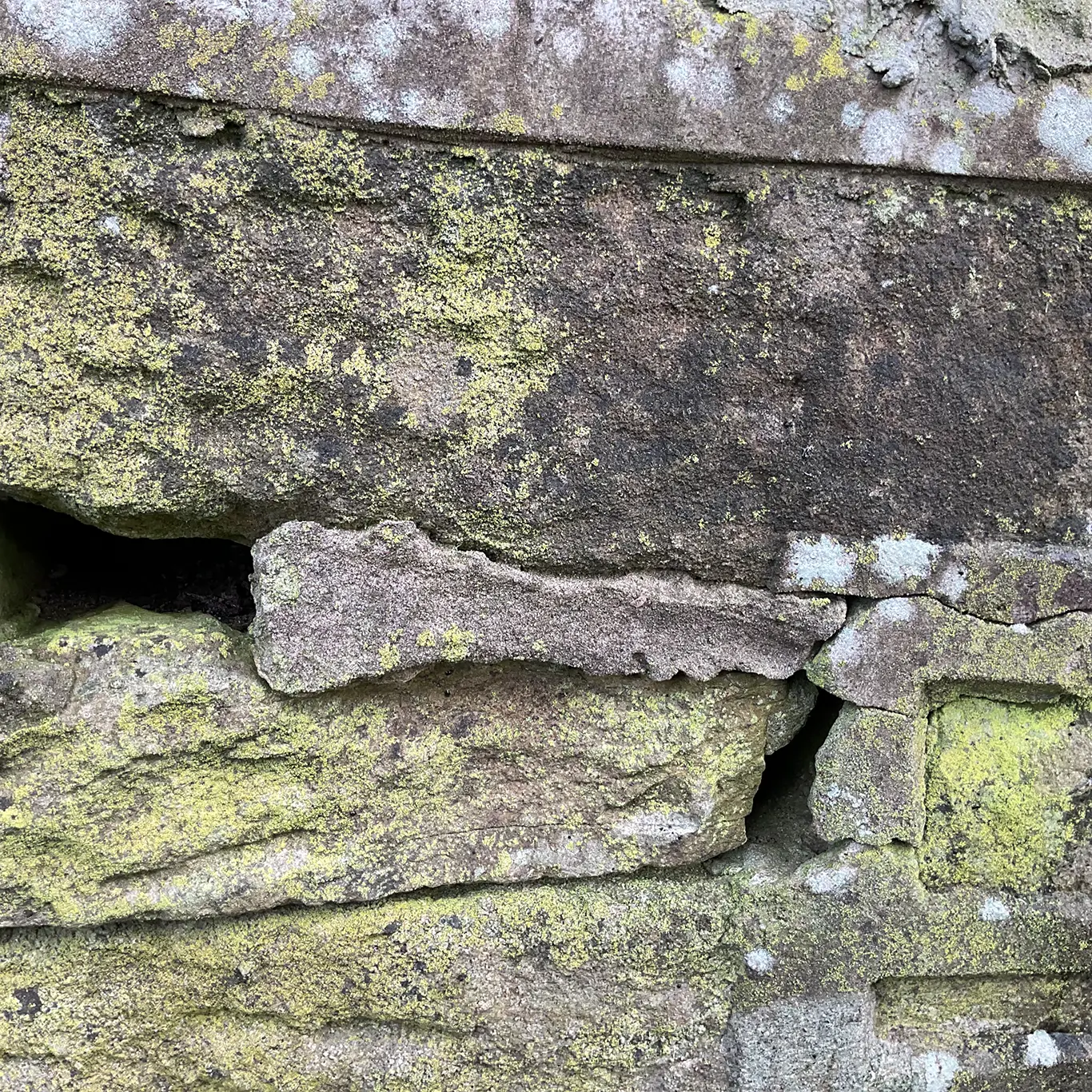
The stones in a wall or on a tree trunk can be covered in pale green patches of green algae, which first came from water onto land about 750 million years ago.
years ago
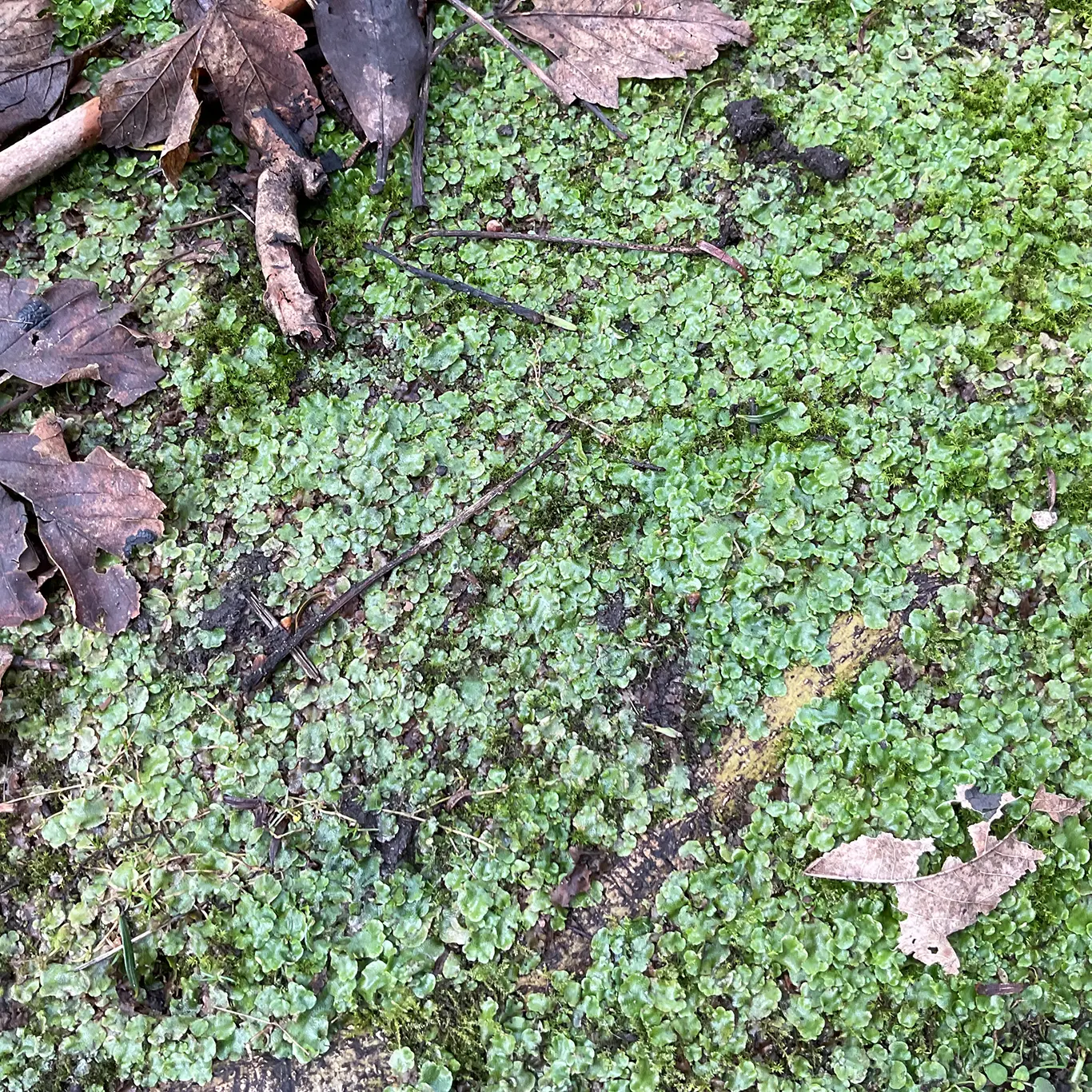
In some damp patches, the greenery is not produced by grass but by small leathery plants with lobes instead of leaves. They are liverworts, and their ancestors developed about 500 million years ago.
years ago
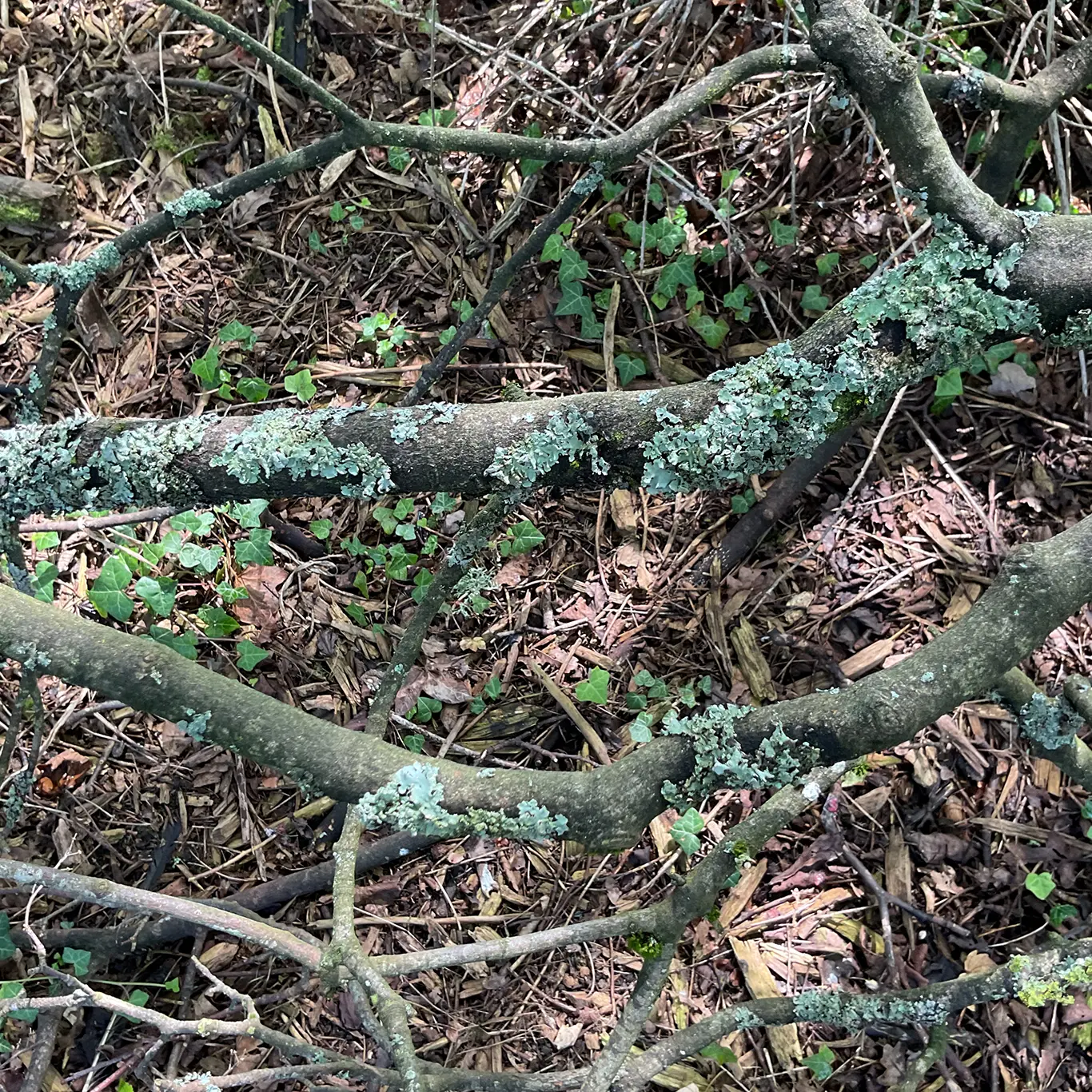
Also on the walls and trees are pale green objects called lichens. They developed about 485 million years ago from algae which had joined with fungi. This branch, which has fallen from the tree, has lichens growing on it.
years ago
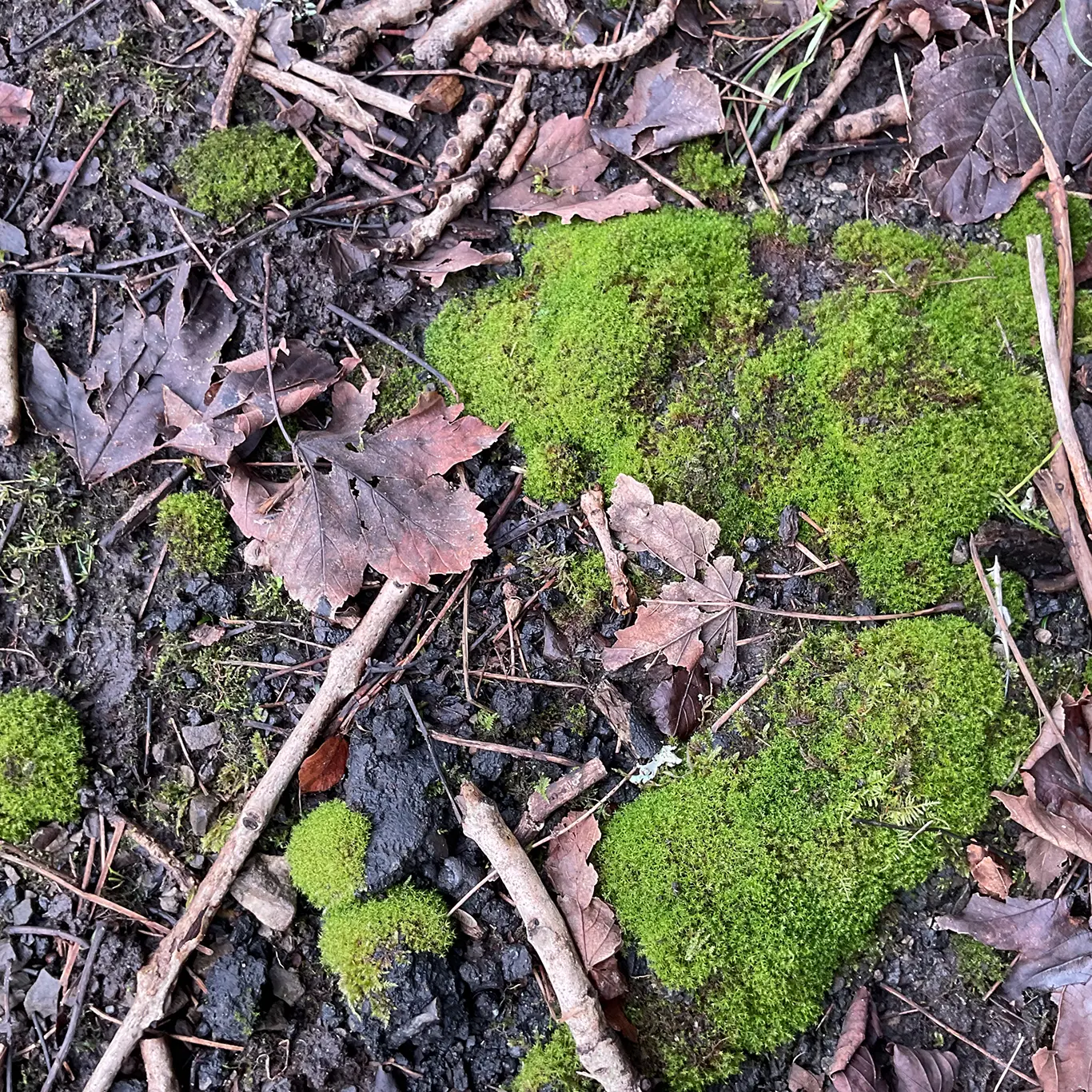
If liverworts are missing in damp places, there are usually mosses. These plants date from about 475 million years ago. They do have leaves, tightly packed together.
years ago
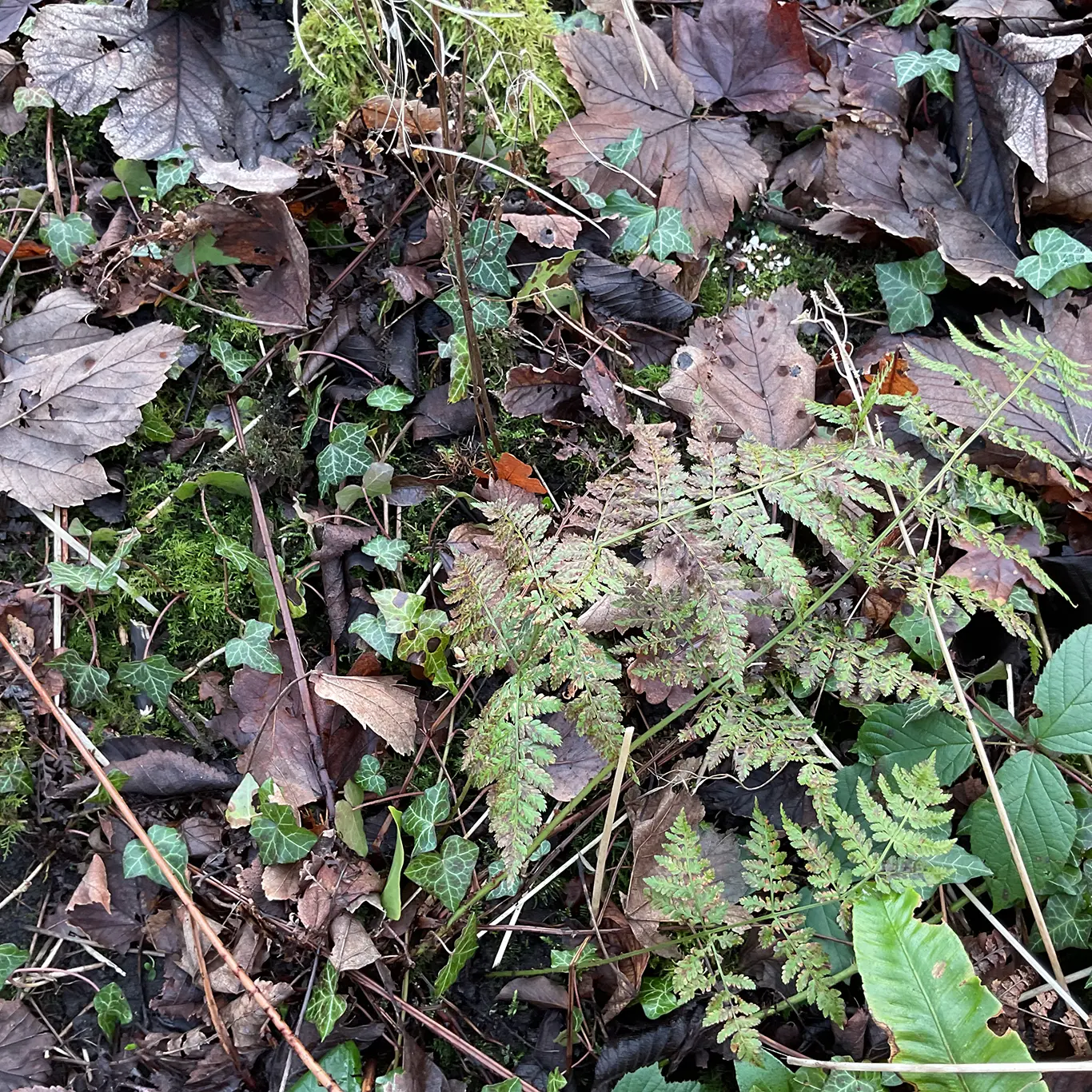
A little later, about 390 million years ago, ferns developed with their large feather-like leaves. At this time of year, most will have died back, but some leaves may still be found.
years ago
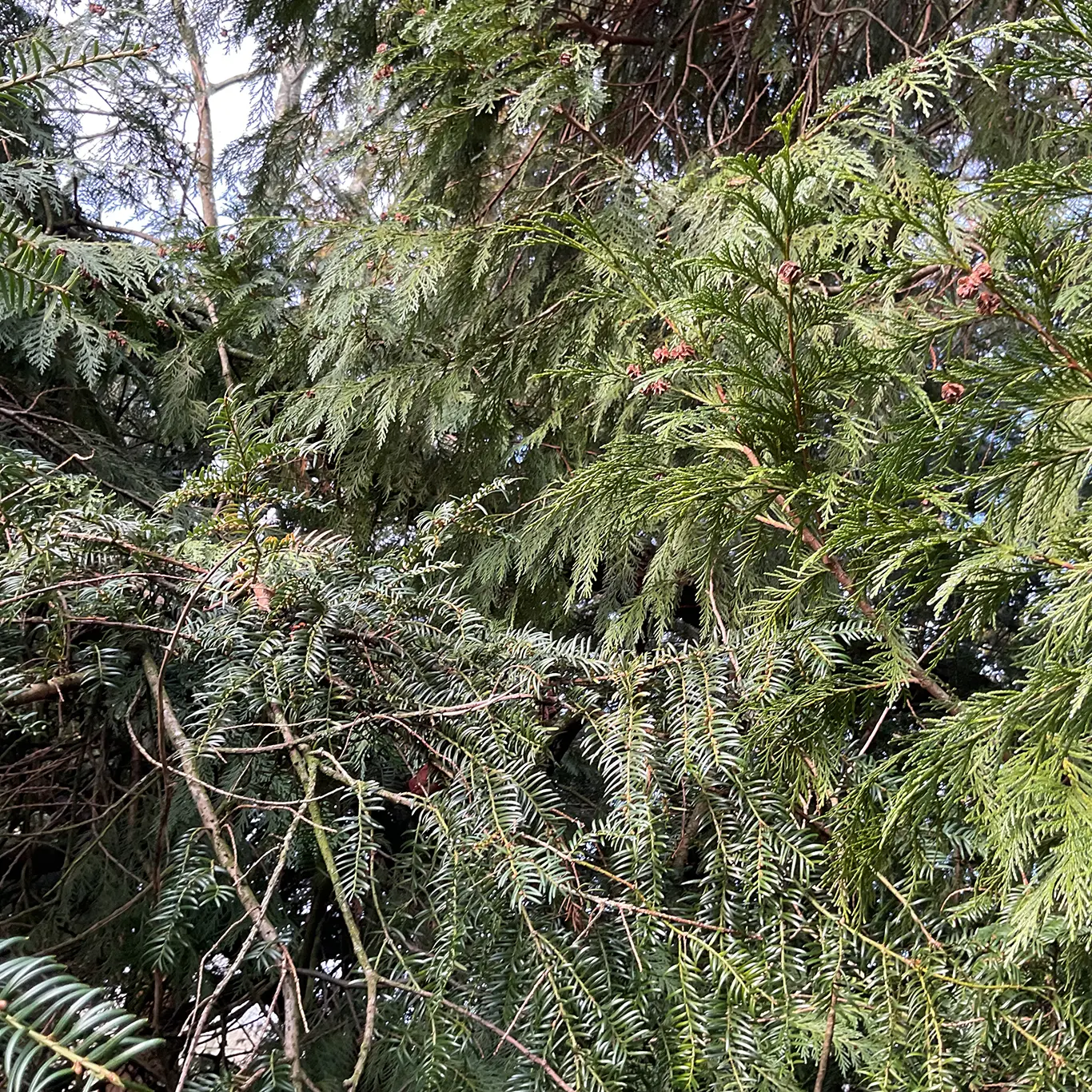
There are many plants which are green all year, like holly, rhododendron and ivy. They are flowering plants, but the first evergreen trees were the conifers, which developed 300 million years ago. Here, a red cedar tree displays its cones in the top right of the picture.
years ago
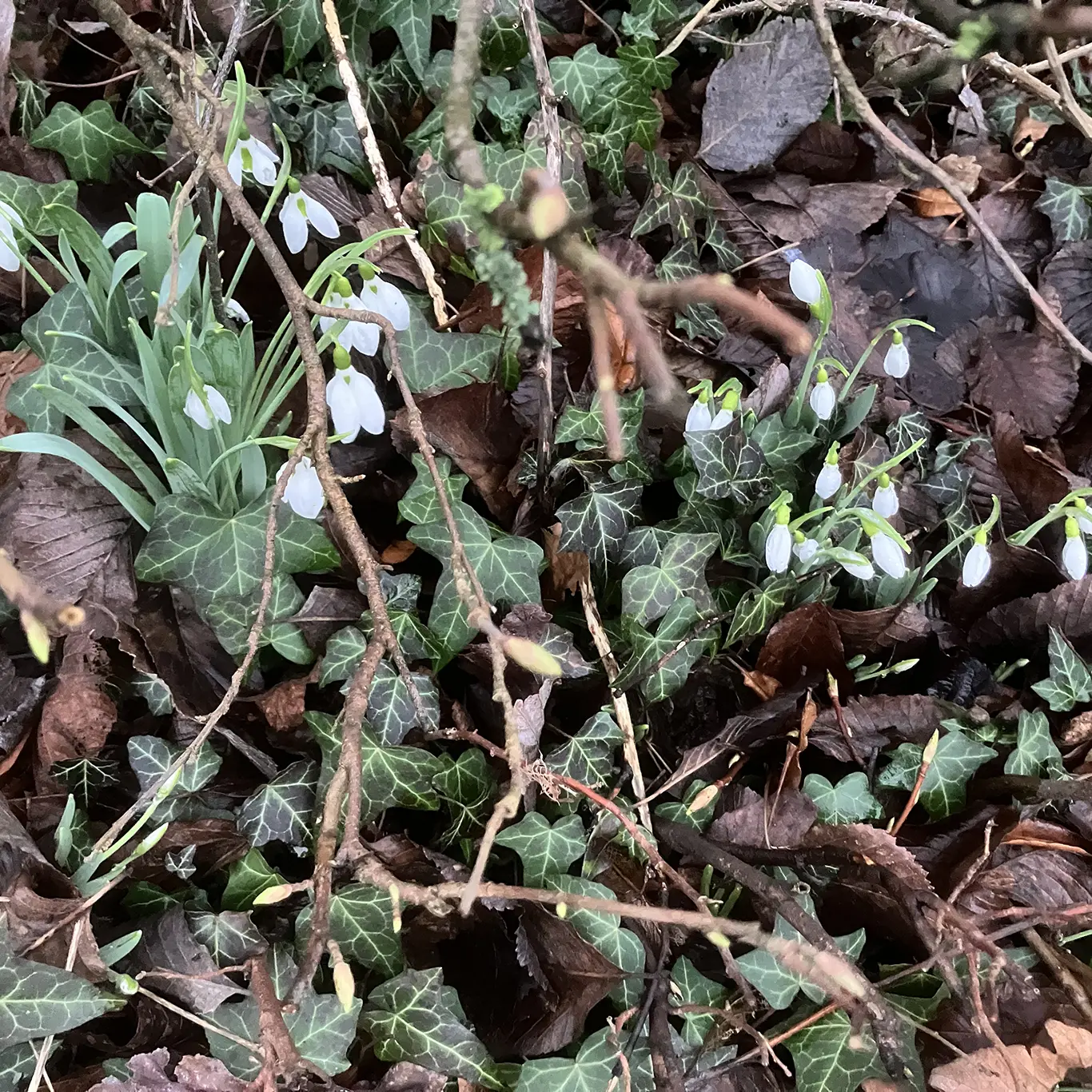
About 140 million years ago, flowering plants began to develop. Early dinosaurs like the giant brontosaurus and the well-known stegosaurus were extinct by then and never saw any flowers, but later dinosaurs like T. rex, Triceratops and Velociraptor did.
Here is one of the first plants to flower on the patch as winter turns towards spring – snowdrops.
years ago
Next time you are on your patch, look for these plants with very ancient ancestors. It will give you an extra dimension to your outdoor experience.
All these dates for the plants are approximations, as they tend to change as more research is carried out on this topic. For more details, simply enter their names into your search engine.
