
A star is a huge ball of gas. It is actually made from two gases – hydrogen and helium (think party balloon). The gases are drawn tightly together by gravity, and this makes them produce light and heat.
Stars are very far away. The distance between us and them is measured in light years. As light travels at about 300,000 metres per second, the distance it travels in a year is very long indeed.
As light spreads out, it becomes weaker, and when it reaches the Earth this weakness shows. To reach us on the ground it must pass through the atmosphere, and as we know, the air is often moving and, in the atmosphere, it really never stops. This means that the weak light is buffeted by the atmosphere as it passes through it, making the star appear to twinkle.
I showed the girls how stars twinkle with a simple model. For this, we have to imagine that a bowl of water is the atmosphere and a torch or flashlight is a star.
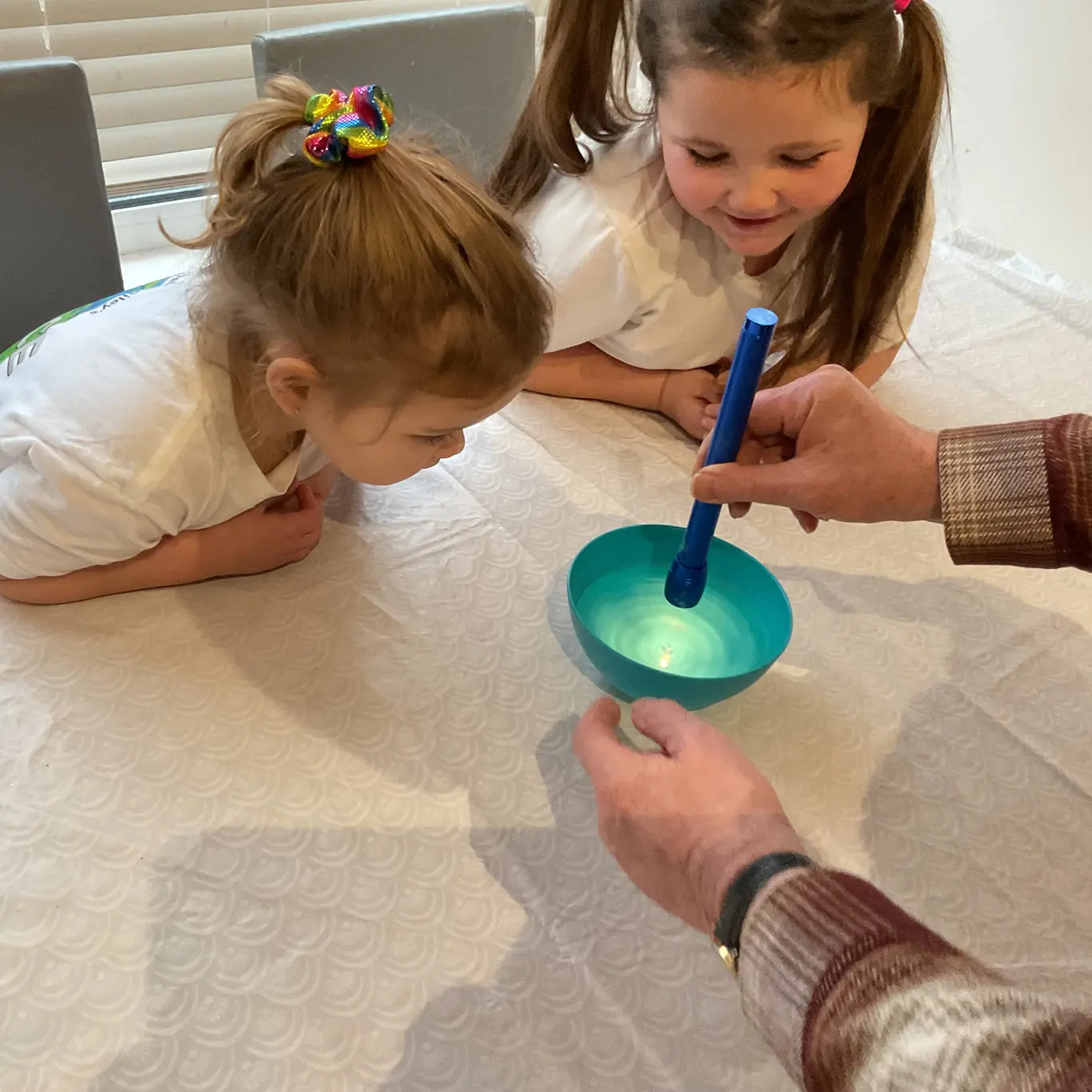
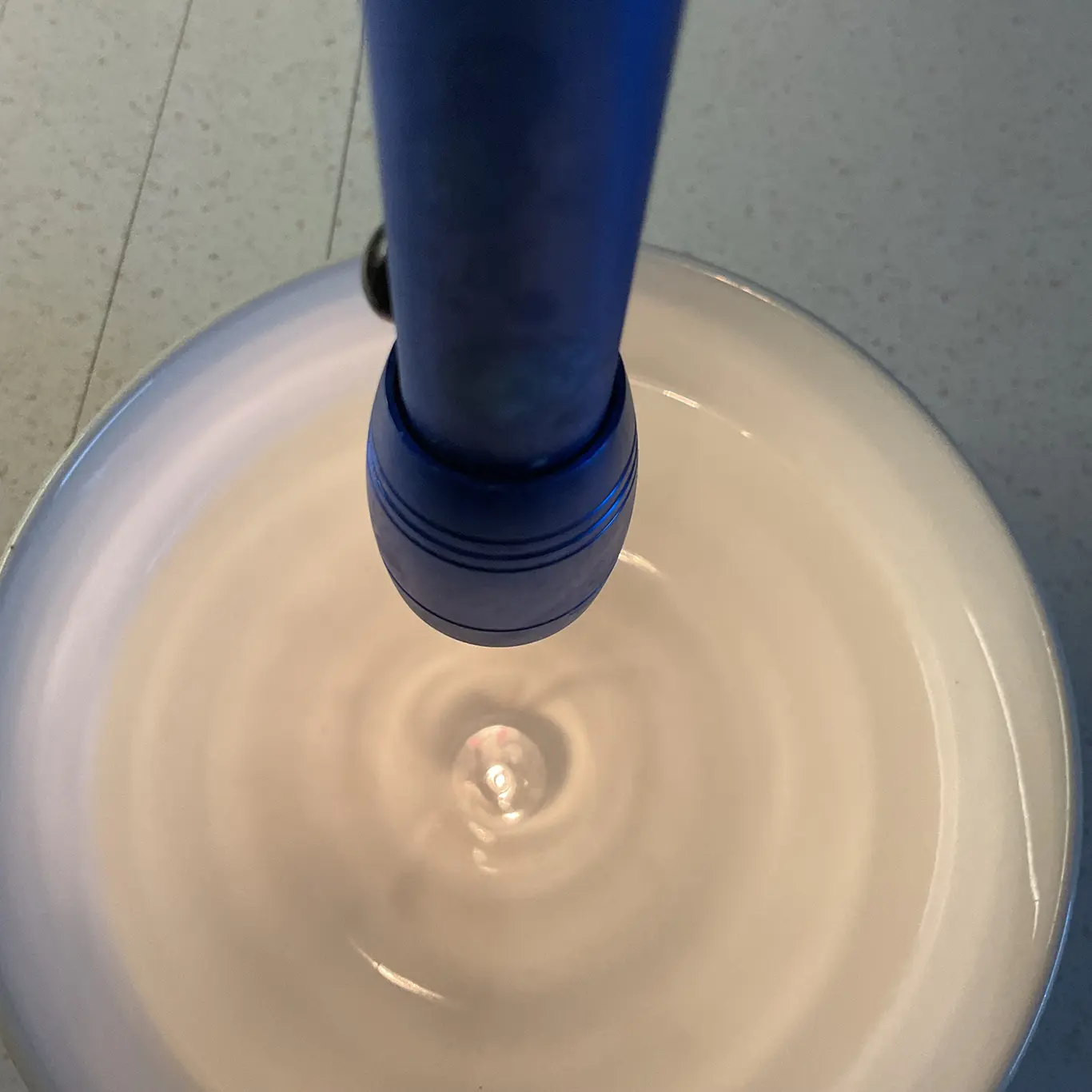
…tapped the side of the bowl to make the water move.
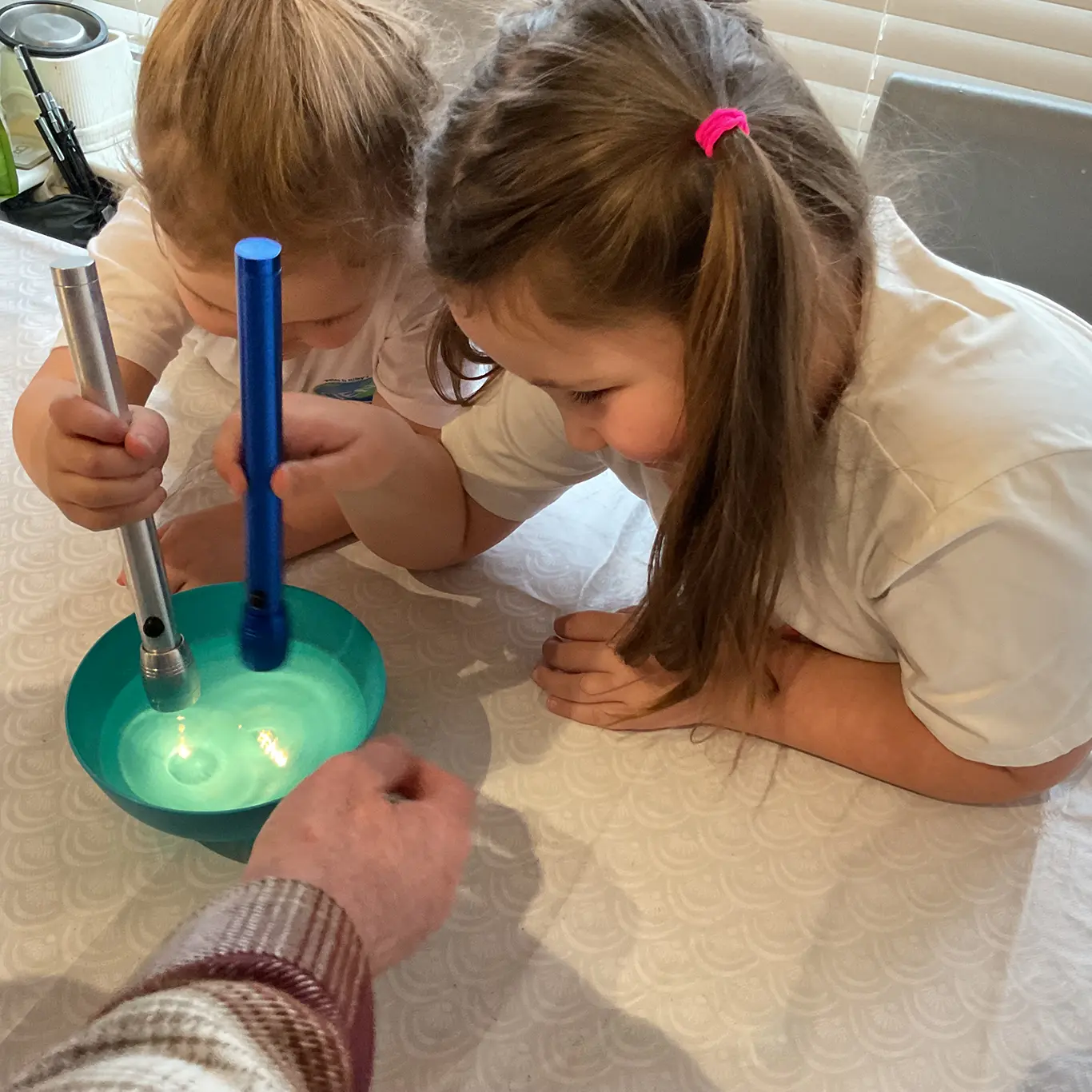
Hattie and Brea then had a go at making their stars twinkle.
If we could go out into space above the atmosphere, we would see that all the stars shine with a steady light. It is the movement of the air in the atmosphere that makes them twinkle.
