
Although there were few insects flying about on this crisp autumn day, my great-grandchildren insisted on a mini beast hunt, so off we went to explore the patch together. What we discovered reminded me why these simple outdoor adventures are so vital for children’s connection with nature.
Setting Out with Simple Tools
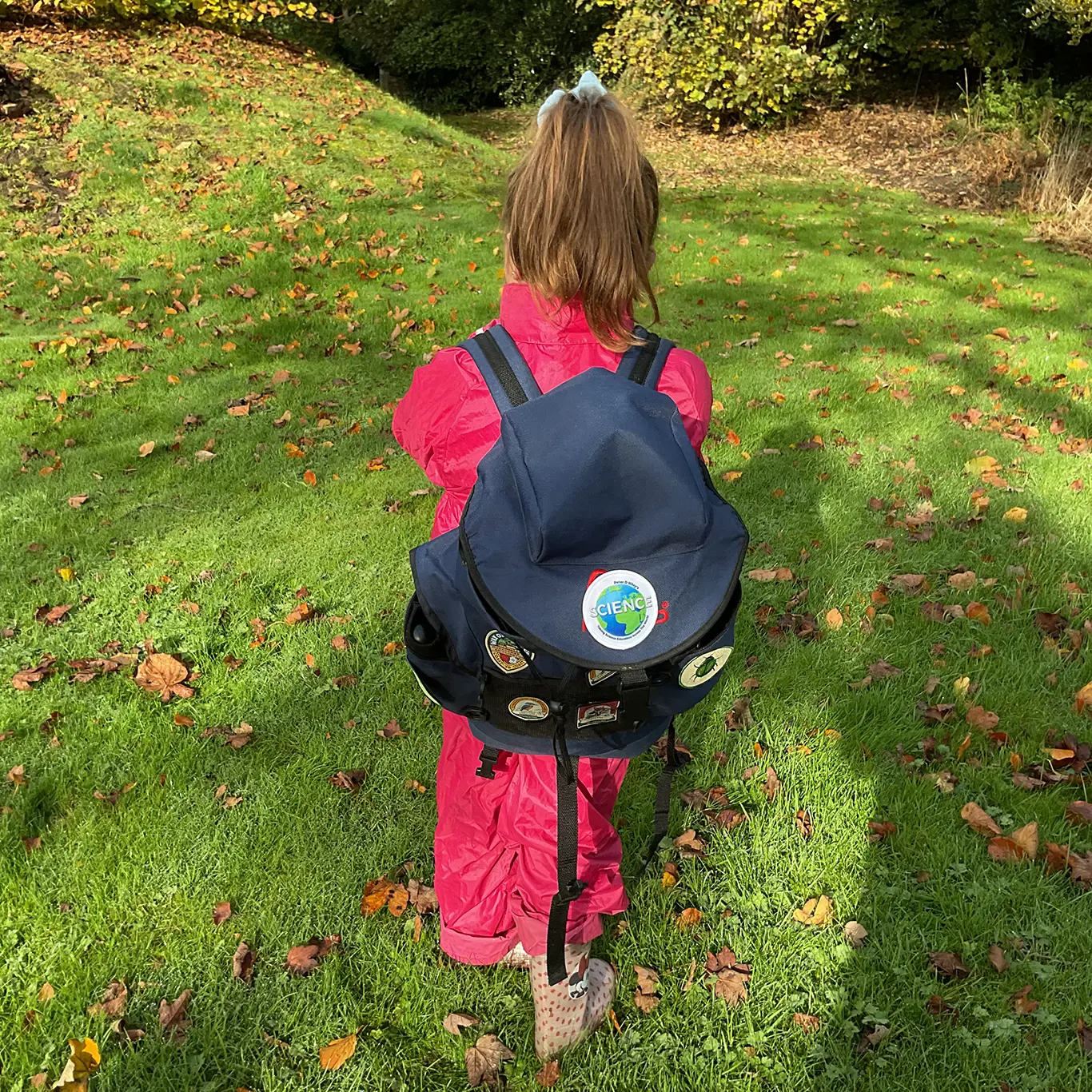
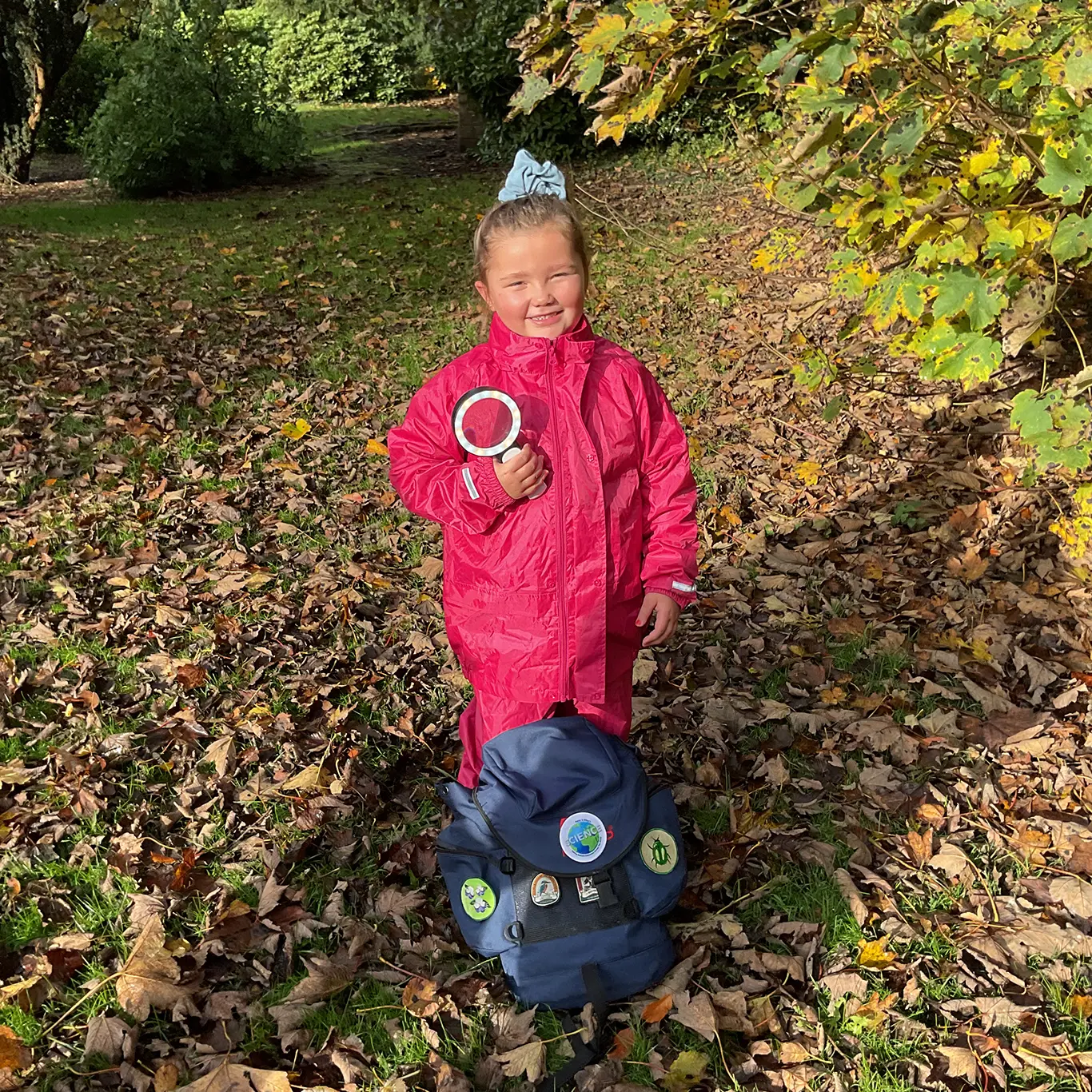
Hattie has her own version of the Outdoor Scientists Backpack – it’s really a mini beast bag that goes everywhere with her!
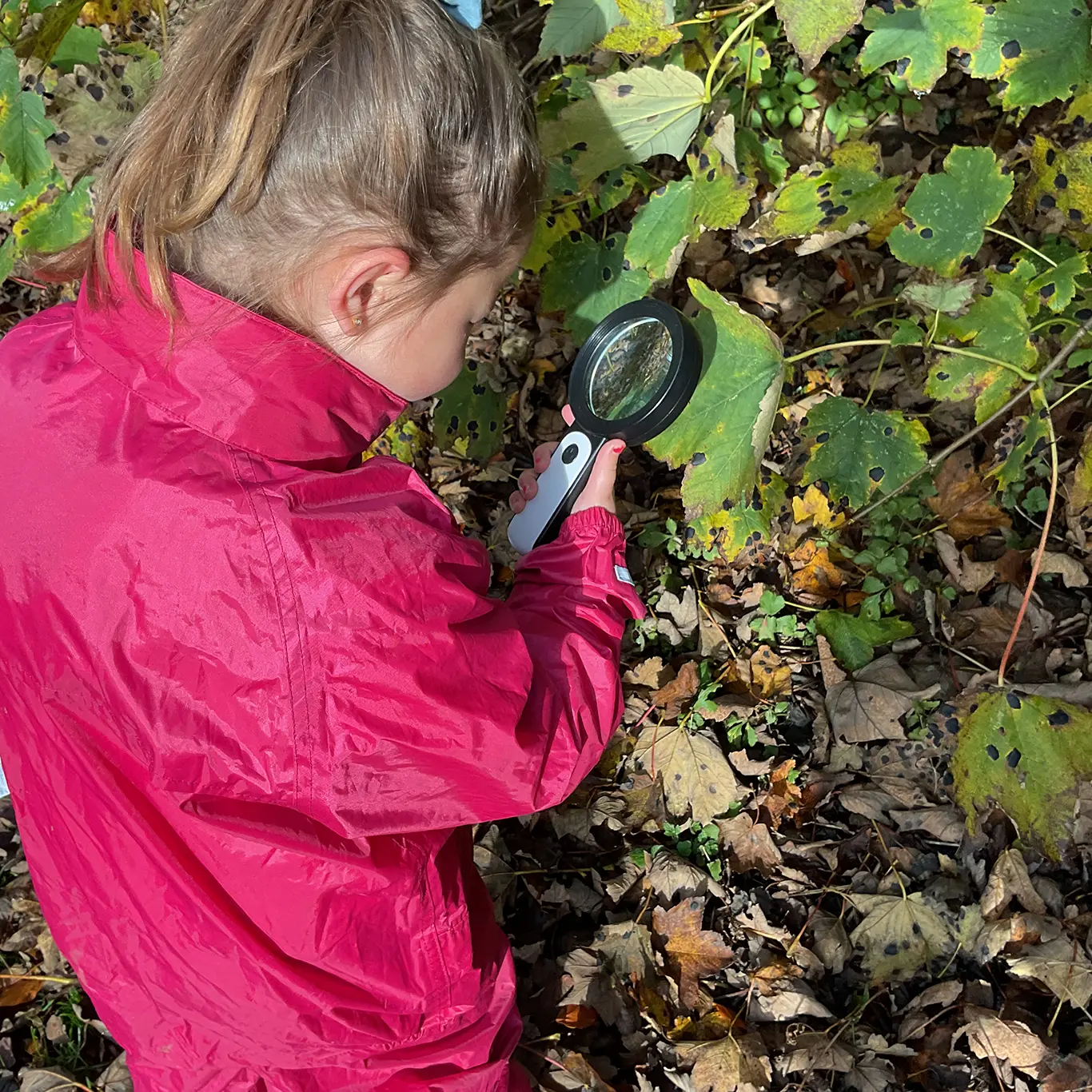
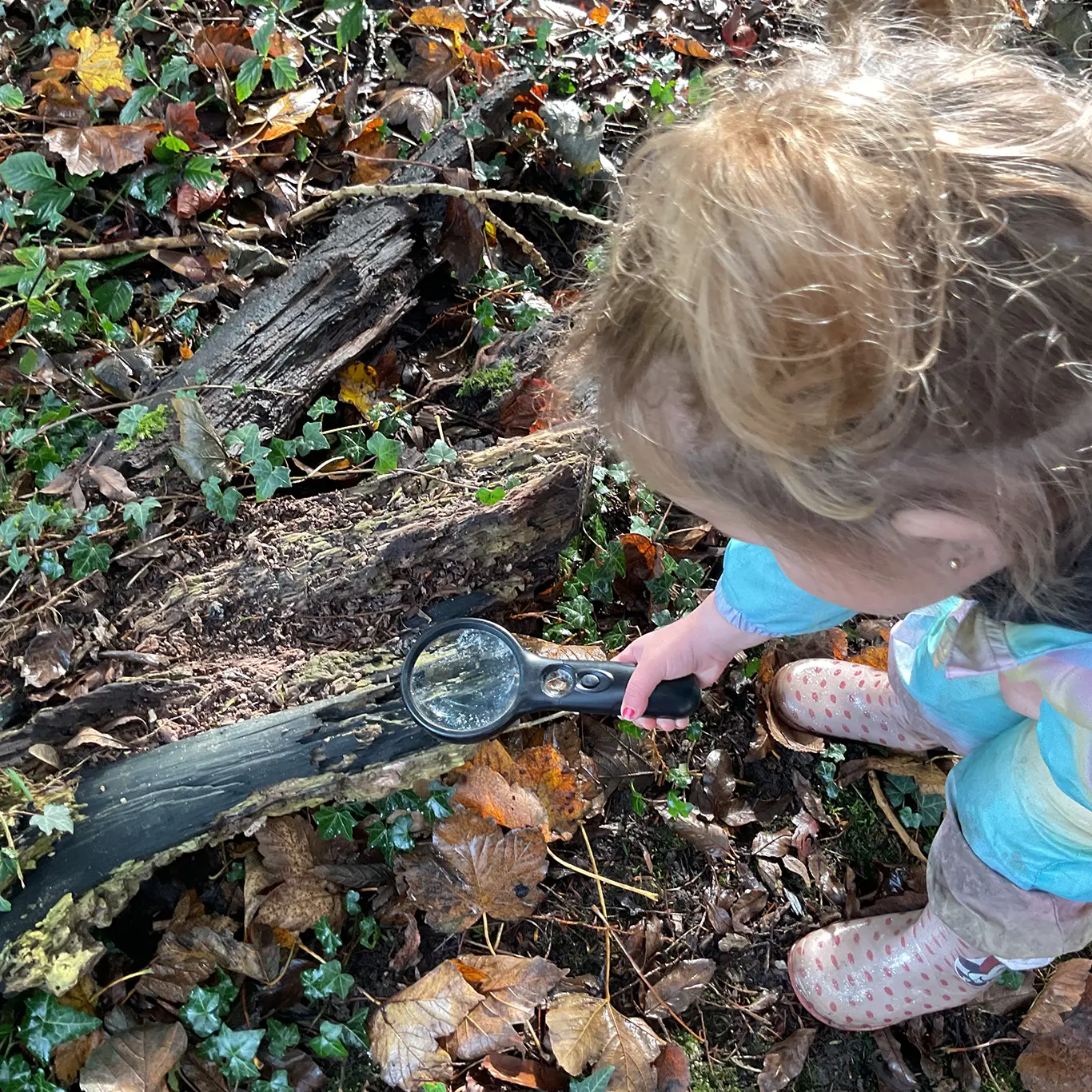
She’s particularly fond of her magnifying glass with three lighting settings, which allows her to examine even the tiniest creatures in different conditions.
Within minutes, she was down on her hands and knees, scrutinising the last of the autumn leaves for hidden wildlife.
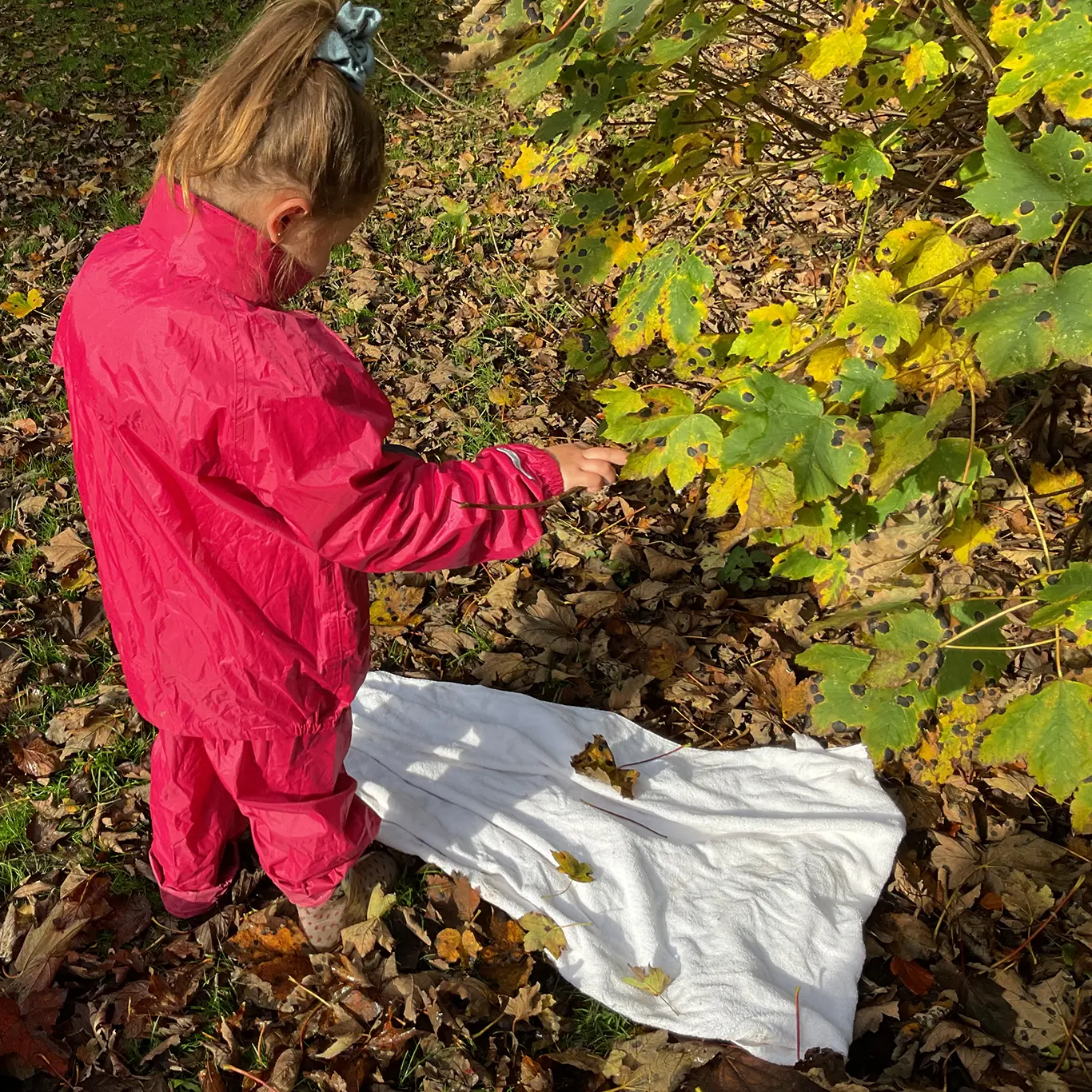
The Branch-Shaking Technique
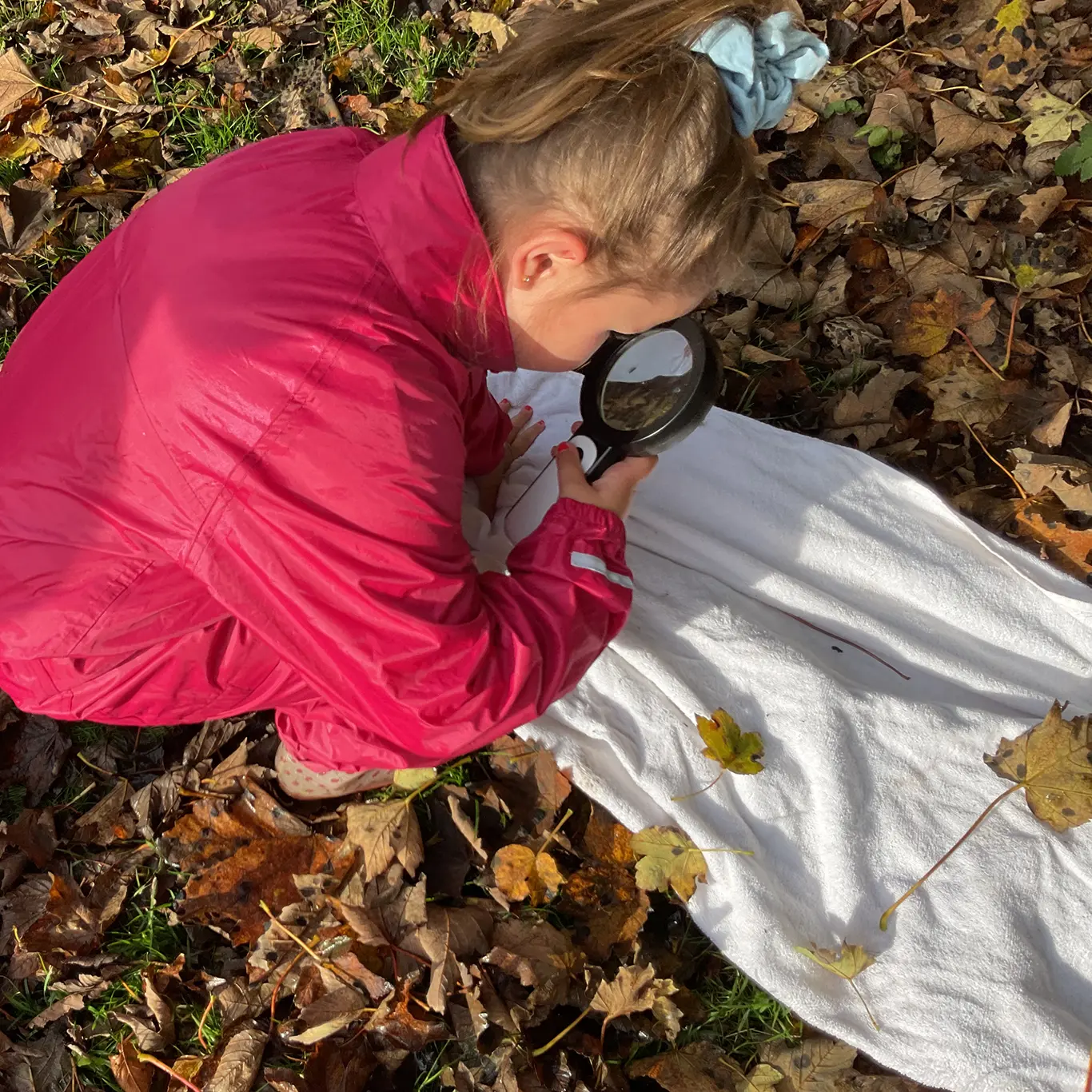
Next, Hattie demonstrated a technique I’ve used for decades: she set out a white towel below a branch, then gave it a gentle shake to dislodge any mini beasts resting there. It’s a simple method, but remarkably effective for revealing the hidden wildlife living in trees and shrubs.
Out came the magnifying glass again to see what had tumbled onto the towel – always an exciting moment of discovery!
Exploring at Ground Level
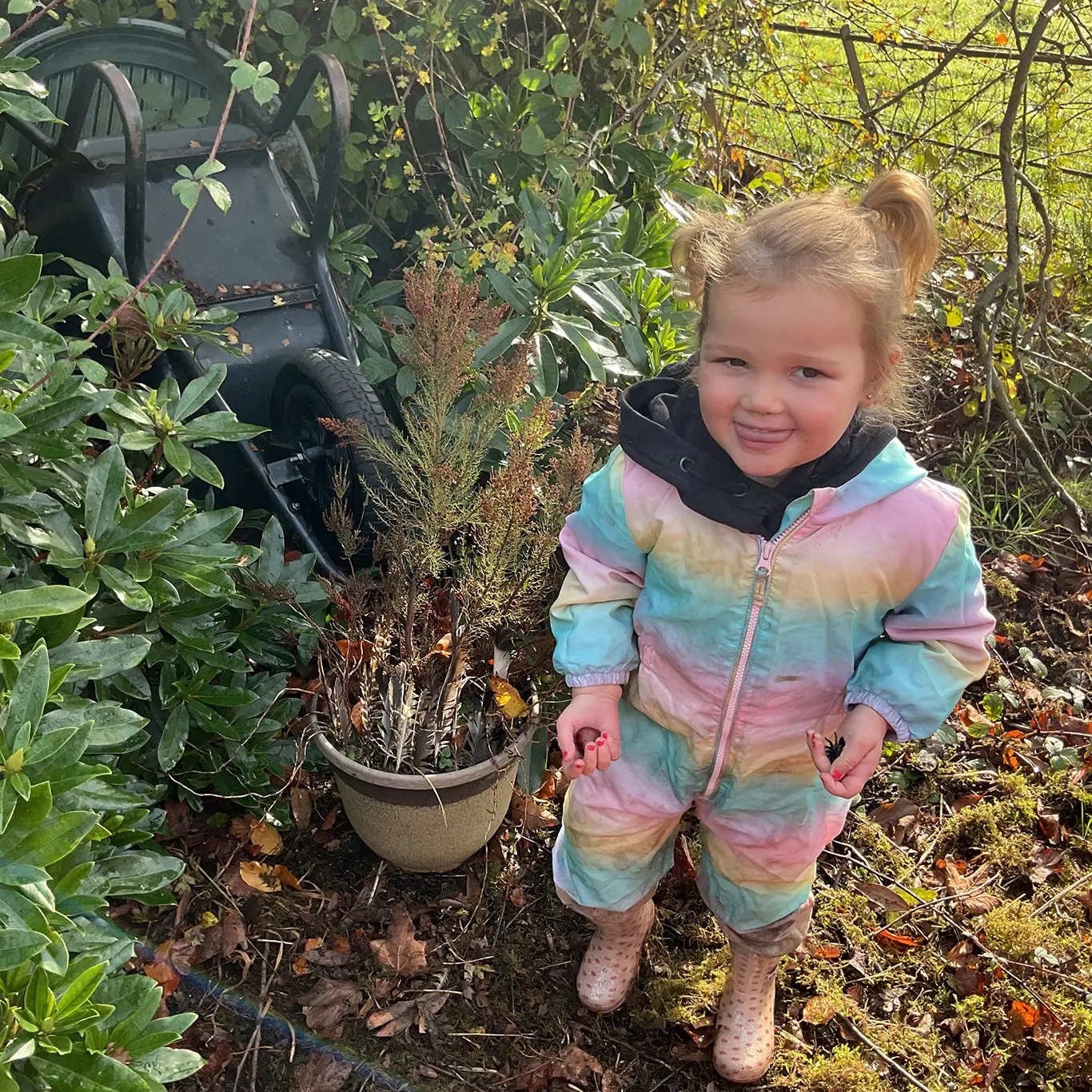
Hattie’s younger sister Brea began by examining her Curiosity Pot, which was filled with feathers she’d collected from birds on the patch – pheasant, wood pigeon, magpie and blackbird. These collections become treasured finds that children return to again and again.
She then moved on to the classic mini beast hunting technique: turning over logs and stones. Her patience was rewarded with woodlice, beetles and slugs – each one carefully observed before its home was restored.
Why These Simple Adventures Matter
It’s wonderful to see the adventures children can have with just a magnifying glass, an old towel and a phone camera to record their explorations. On this sunny autumn afternoon on the patch, we spent quality time outdoors with minimal equipment and maximum engagement.
Why not try the same with your children?
You’ll enjoy:
- Plenty of fresh air and physical activity
- Exciting discoveries that spark curiosity
- Opportunities to learn about seasonal changes
- Quality time together in nature
- A good night’s sleep afterwards (for everyone!)
Autumn is an excellent time for mini beast hunts. Whilst there may be fewer flying insects, there’s abundant life beneath logs, under leaves and in the soil. The cooler weather means children can explore comfortably without overheating, and the seasonal changes provide talking points about how wildlife adapts through the year.
What you’ll need:
- A magnifying glass (ideally with lighting)
- A white cloth or towel
- A container for temporary observation
- A camera or phone for recording discoveries
- Curiosity and patience
Remember to teach children to handle all creatures gently and to return logs and stones to their original positions – we’re visitors in these animals’ homes.
