
From Falling Leaves to a Fungal Foray
The vibrant colours and intricate shapes of fallen leaves certainly keep children’s eyes fixed on the ground during autumn walks, but there’s something equally fascinating waiting to be discovered amongst them: fungi.
More precisely, I’m talking about the parts we call toadstools and mushrooms – those peculiar structures that pop up above ground. Before we begin our exploration, here’s an important safety note: we must look but never touch wild fungi, as some species are poisonous. However, we can still observe, wonder, and learn about what fungi are and the vital role they play in nature.
What Exactly Are Fungi?
Here’s something that surprises many children (and adults!): fungi aren’t plants. They belong to an entirely different kingdom of living things. The key difference? Unlike plants, fungi can’t make their own food from sunlight through photosynthesis. Instead, they get their food the same way we do – by digesting it!
Beneath the soil surface, fungi create an intricate carpet of microscopic threads that ooze digestive juices (rather like our saliva) into the spaces around them. When these juices encounter the remains of a plant or animal, they break them down. The threads absorb the nutrients, grow larger, and eventually produce those distinctive domes and umbrellas we spot in the grass above ground.
Nature’s Recyclers
As fungi feed on dead material, they leave behind substances in the soil that plants can absorb to grow. Animals then eat these plants, and in time, the remains of both plants and animals return to the soil, where the cycle begins anew. Fungi are nature’s recyclers! In our patch, the fallen leaves are next in line to be recycled back into the ecosystem.
My Autumn Fungal Foray
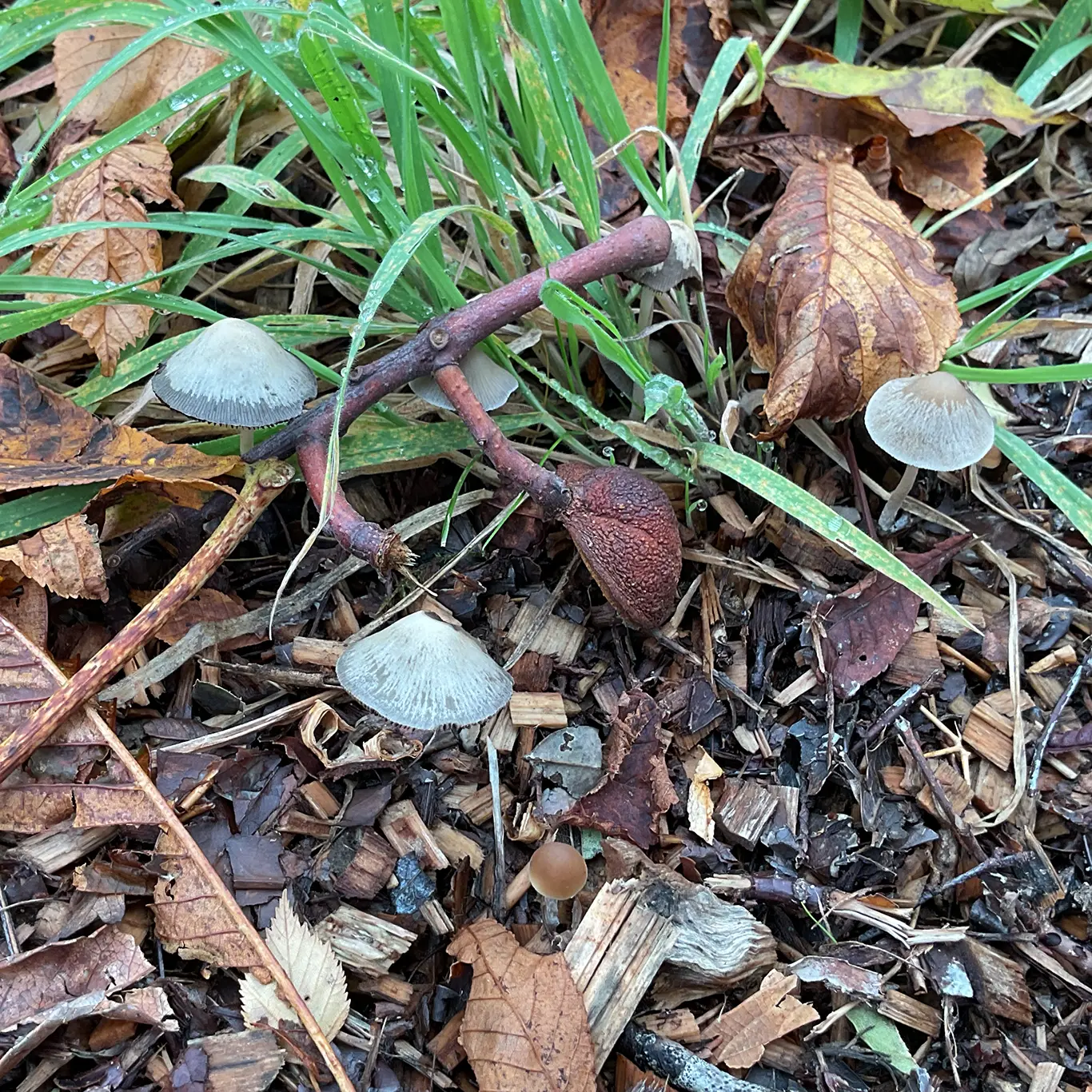
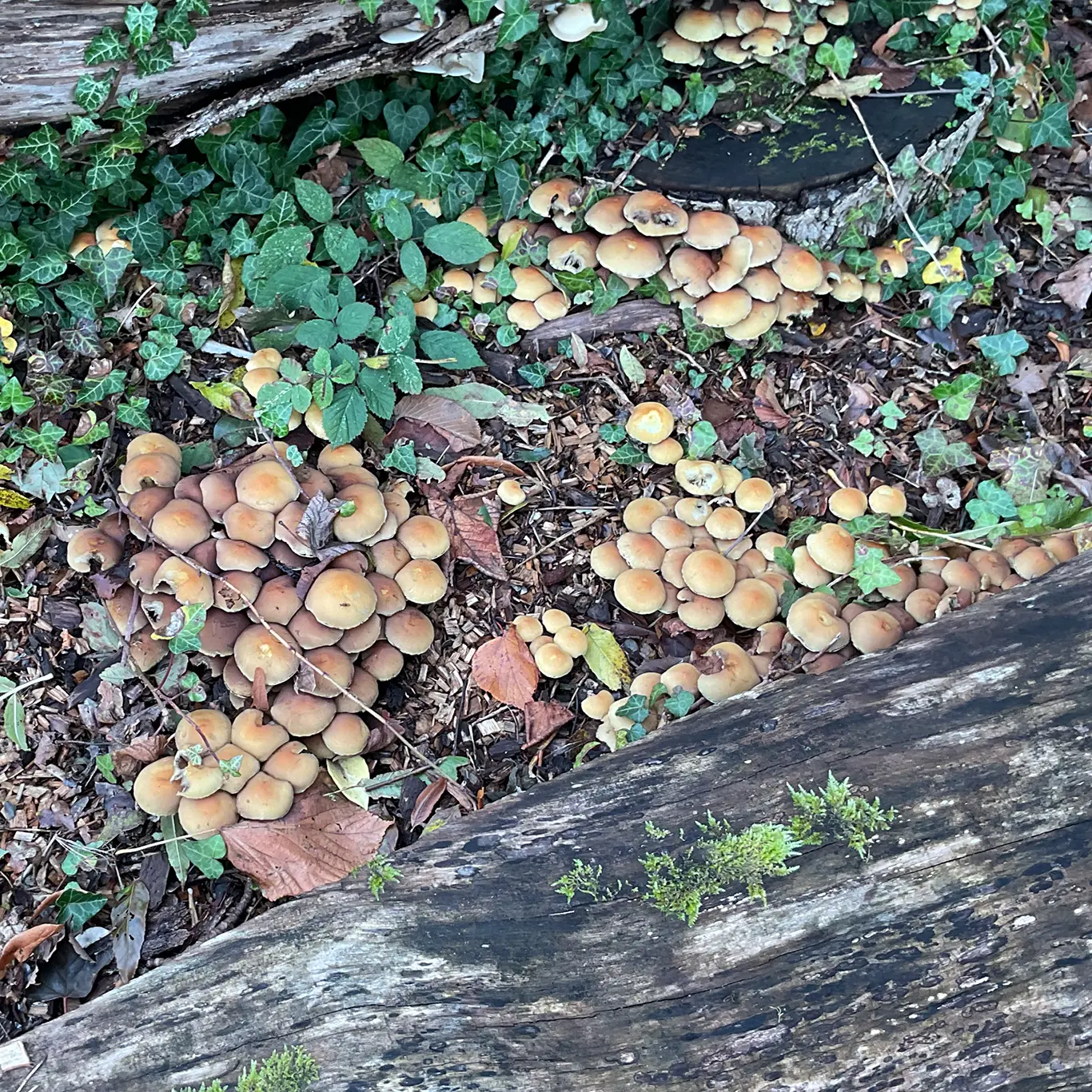
I took a walk around our patch on the planet and created this fungi photo album to share what I discovered.
Umbrella-shaped fungi

Dome-shaped fungi
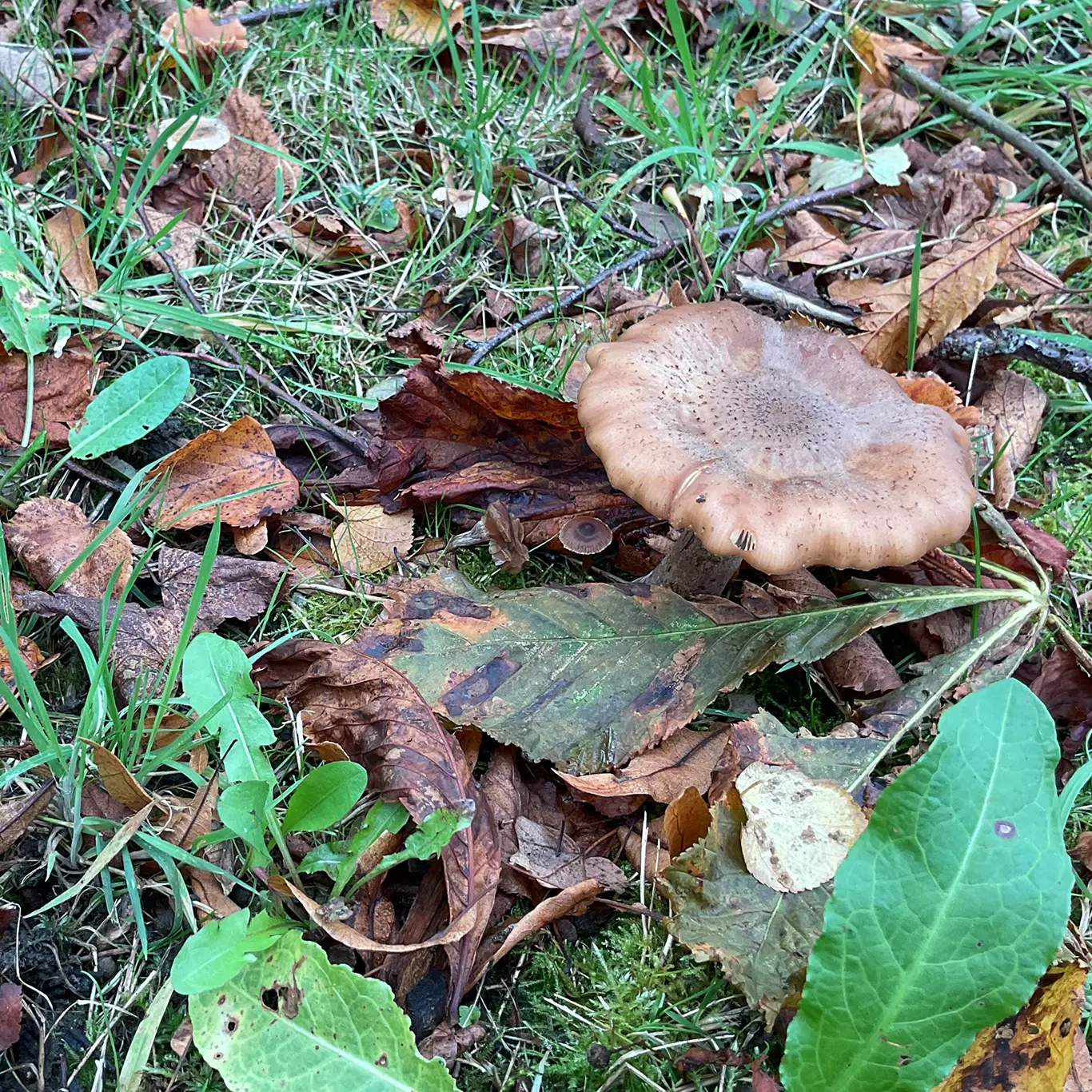
Fungi nestled in autumn leaves
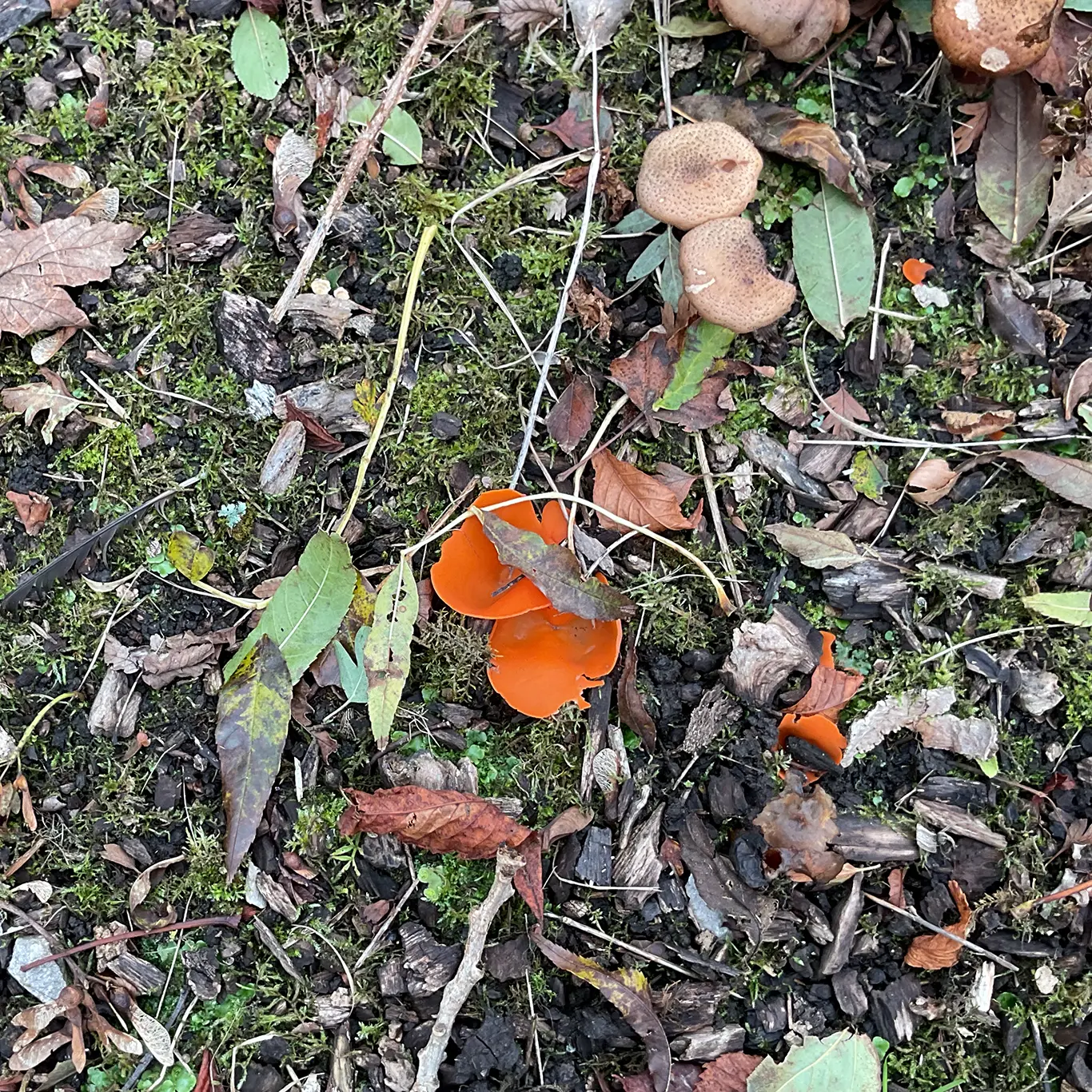
Close-up of fungi in leaves
Sometimes you’ll find toadstools growing in lines or circles. The circles are created by the fairy ring fungus – a magical name that sparks children’s imaginations! If you look carefully amongst the leaves in this photograph, you can spot a line of small brown umbrellas running up the centre of the image.
Fungi don’t just feed on leaves – they’re also busy recycling logs too. And tree stumps!
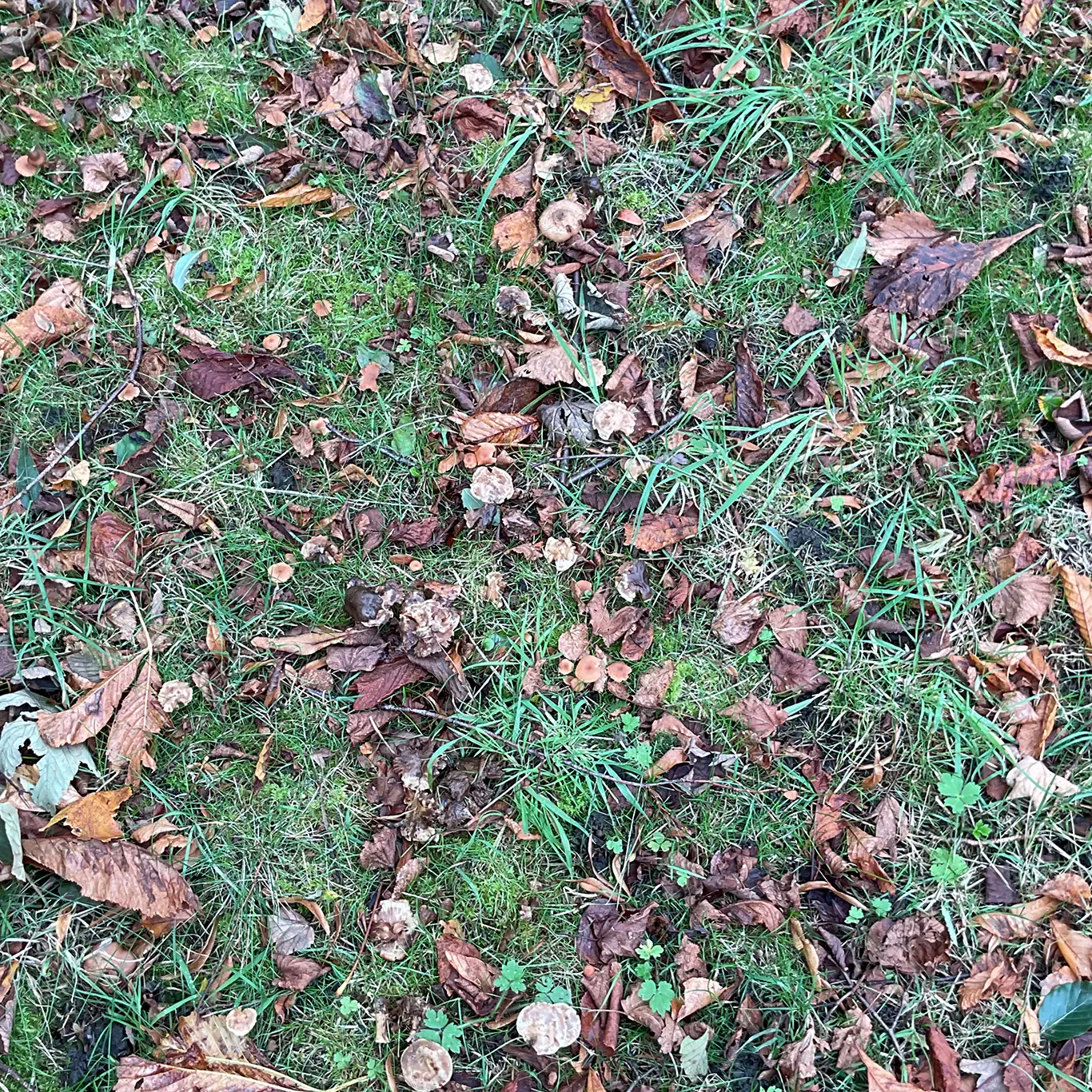
Line of small fungi
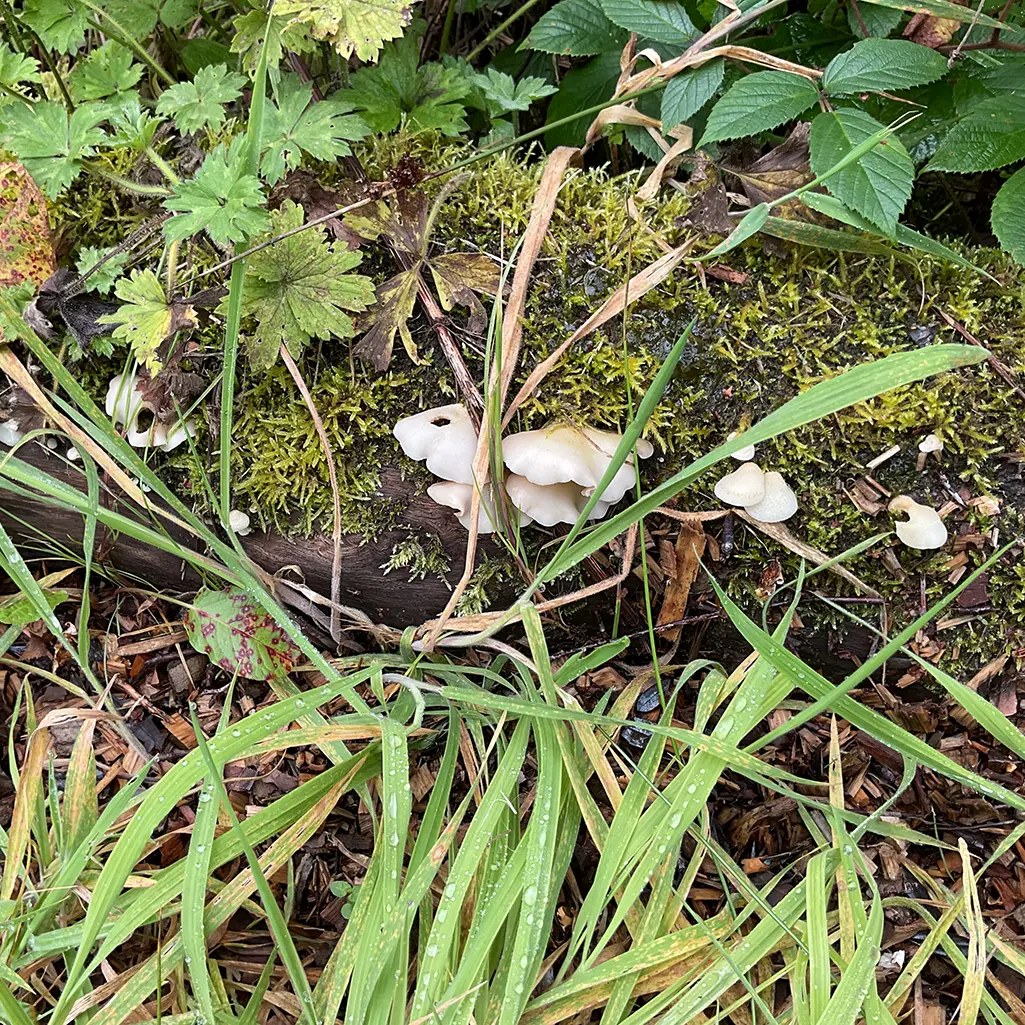
Fungi growing on a log
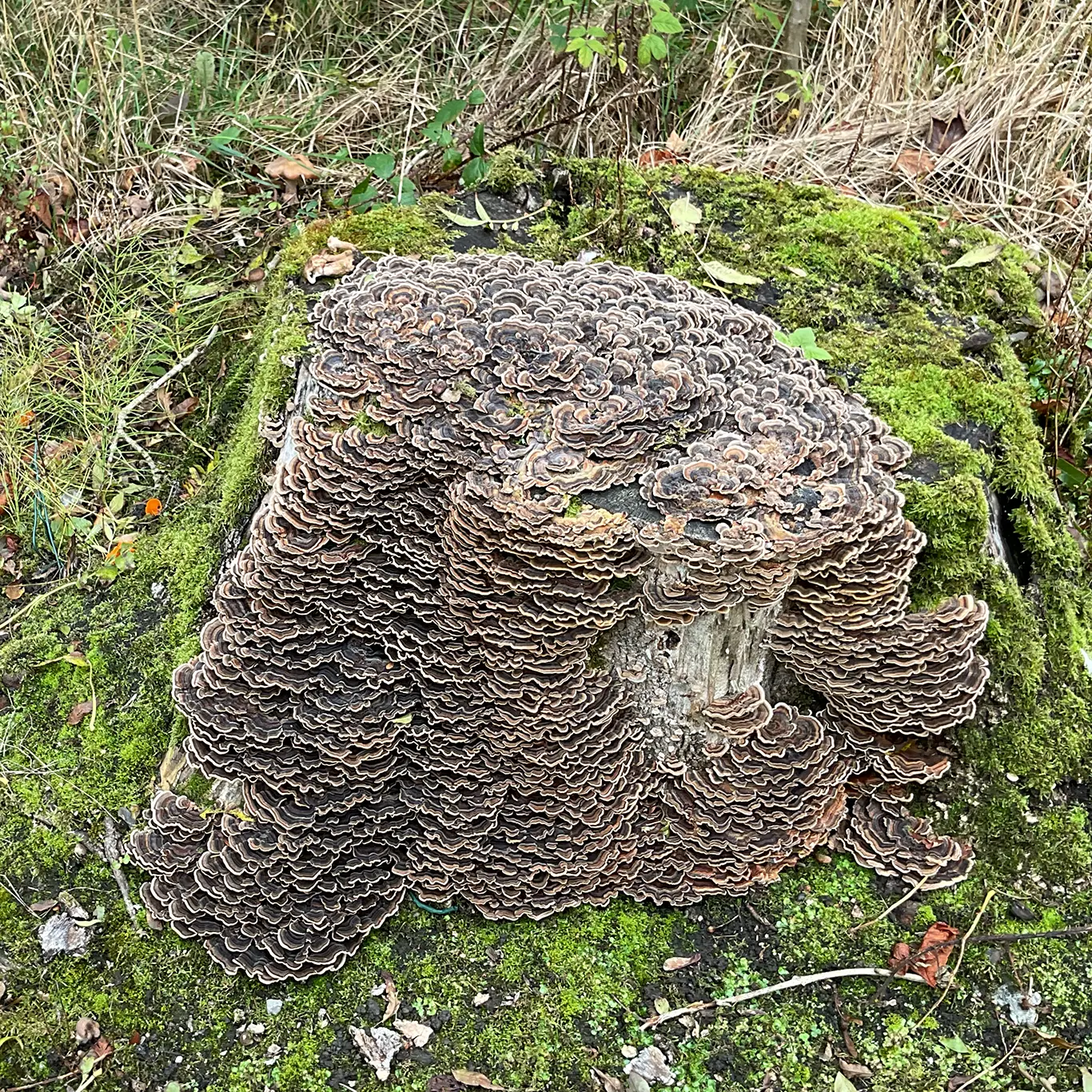
Fungi on a tree stump
What Is a Fungal Foray?
When groups of people venture out to look for fungi at this time of year, it’s called a fungal foray. These organised walks are typically led by an expert who helps identify what’s been found. My fungal foray was simpler – I was content to search for fungi and photograph them on our patch, marvelling at their extraordinary shapes, colours, and abundance without attempting identification. Remember: for safety reasons, never touch wild fungi.
Gramps Lab: The Mushroom Spore Print Experiment
Back in my Gramps Lab, I set up an experiment using a mushroom I’d bought from the supermarket (which is safe to handle). Scientists use the word ‘cap’ to describe what we’ve been calling umbrellas. Underneath an open cap are structures called gills – named because they resemble fish gills. I wanted to discover what these gills do, so I placed a mushroom cap gill-side down on white paper and left it overnight.
In the morning, I carefully lifted the cap and found this in the picture.
The black lines reveal where the gills were positioned. Under a microscope, you’d see they’re made up of countless tiny black dots called spores. The gills produce these fungal spores, which are then carried away on air currents to new locations. When they land on damp soil, they can sprout a thread and join the woodland carpet beneath the surface.
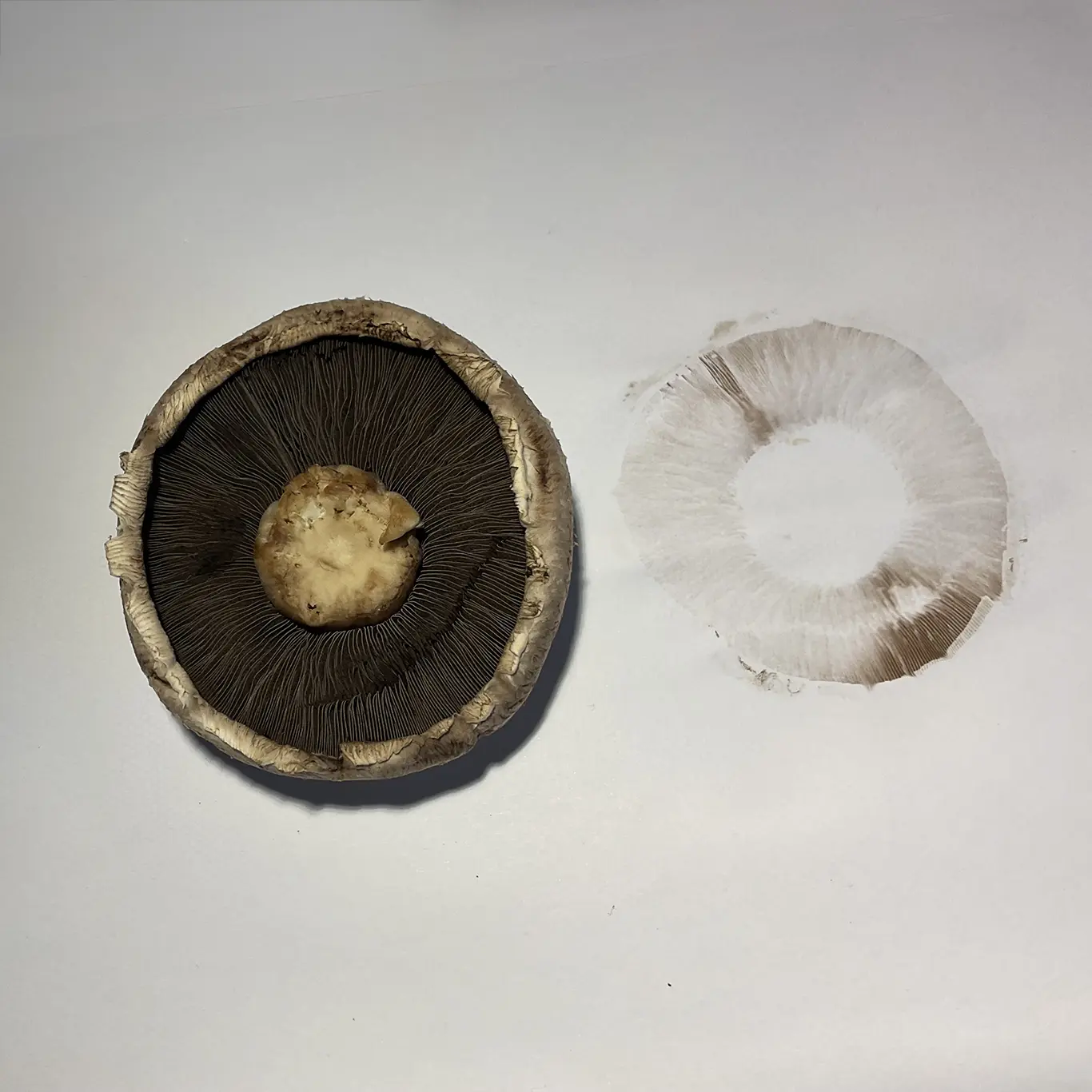
Mushroom spore print showing black gill pattern
Try This at Home
This spore print experiment is a wonderful activity to try with children. Simply purchase an edible mushroom from your local supermarket, remove the stem, place the cap gill-side down on white paper, cover with a bowl (to prevent draughts), and leave overnight. The results are always impressive!
