
Real Rockhounds in Action
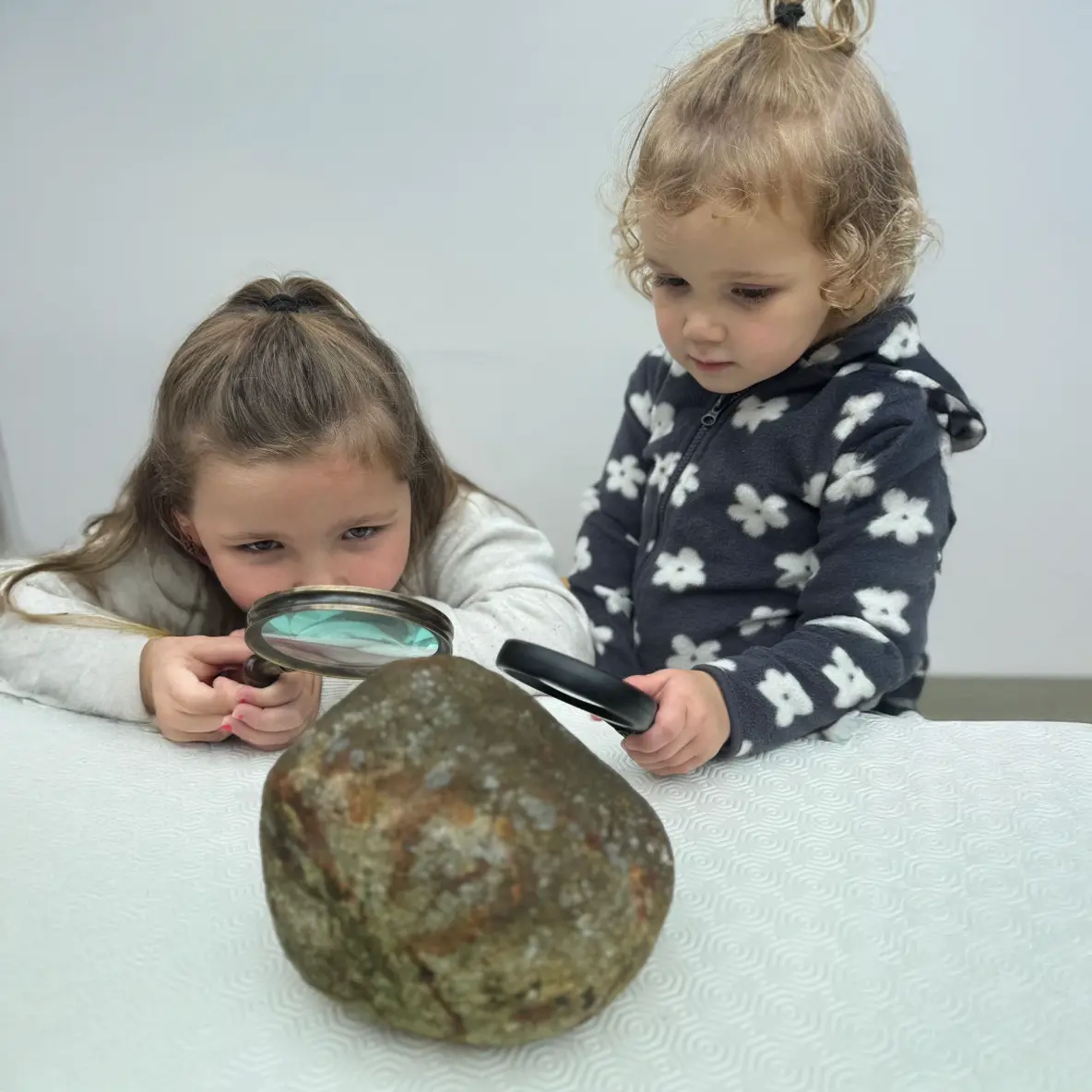
My young friends Brea and her sister Hattie are perfect examples of children becoming rockhounds. Recently, they spent an afternoon carefully examining a rock from their garden, captivated by its surface textures and patterns. This simple garden discovery sparked hours of geological curiosity.
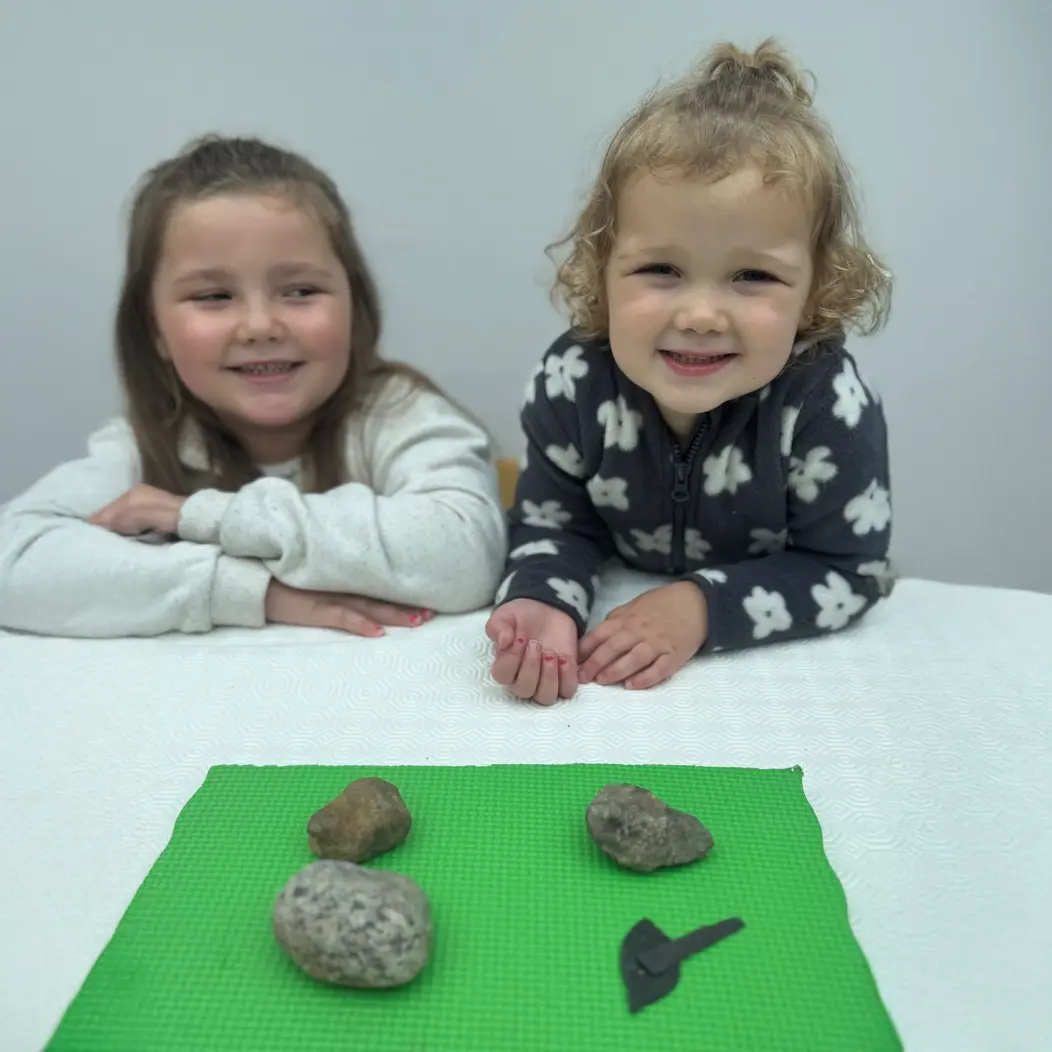
During their countryside walks, the sisters have built an impressive collection of pebbles, each telling its own geological story.
Understanding Your Rock Collection: A Teacher’s Guide
Let me share what I’ve taught thousands of children about identifying common rocks:
The Yellow Pebble – Sandstone
This sedimentary rock formed over millions of years as sand grains settled in ancient seas and deserts, gradually cementing together. Children love imagining beaches from millions of years ago when they hold sandstone.
The Grey Pebble – Limestone
Made from compressed shells of ancient sea creatures, limestone often contains visible fossils. This rock type demonstrates how our planet’s history is literally written in stone.
The Speckled Pebble – Granite
This igneous rock formed deep underground when hot magma cooled slowly, creating the beautiful crystal pattern children can see: pink feldspar, white quartz, and black mica. It’s like nature’s own artwork.
The Flat Black Pebbles – Slate
Originally clay, this metamorphic rock was transformed by intense heat and pressure as tectonic plates shifted. The flat layers make it perfect for skipping stones – combining geology with play.
The Excitement of Fossil Discovery
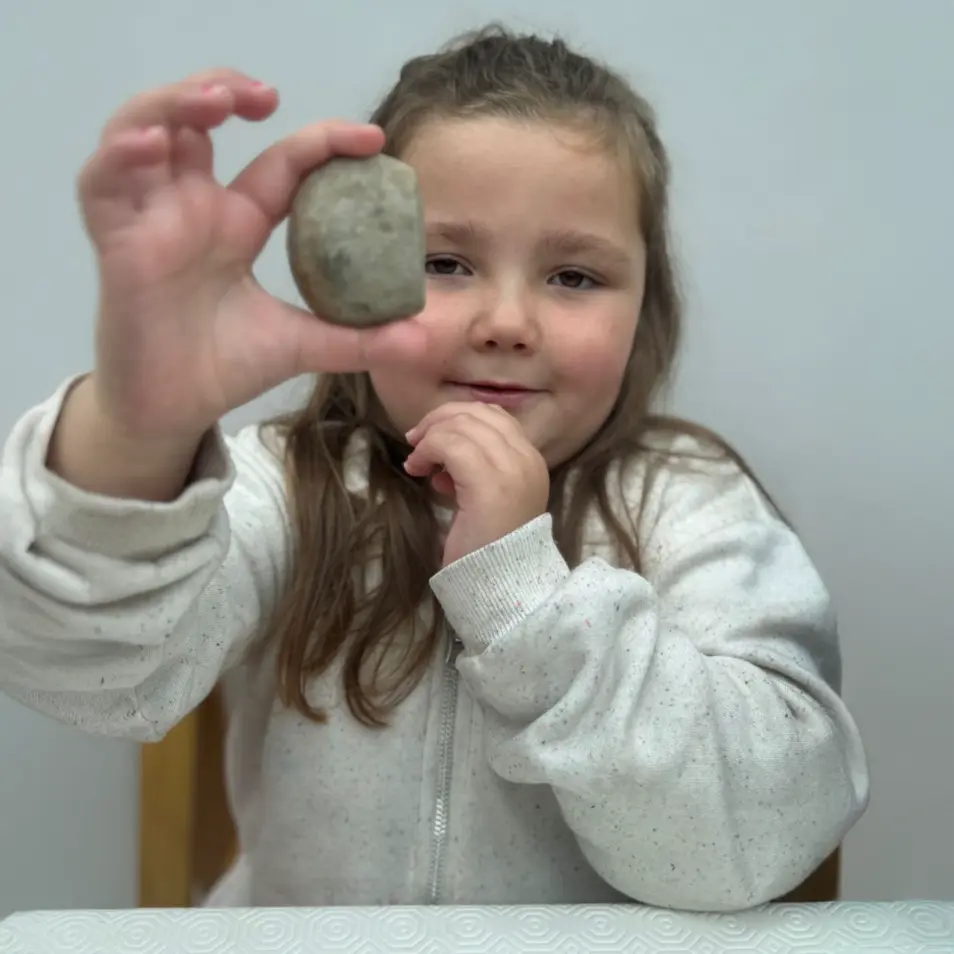
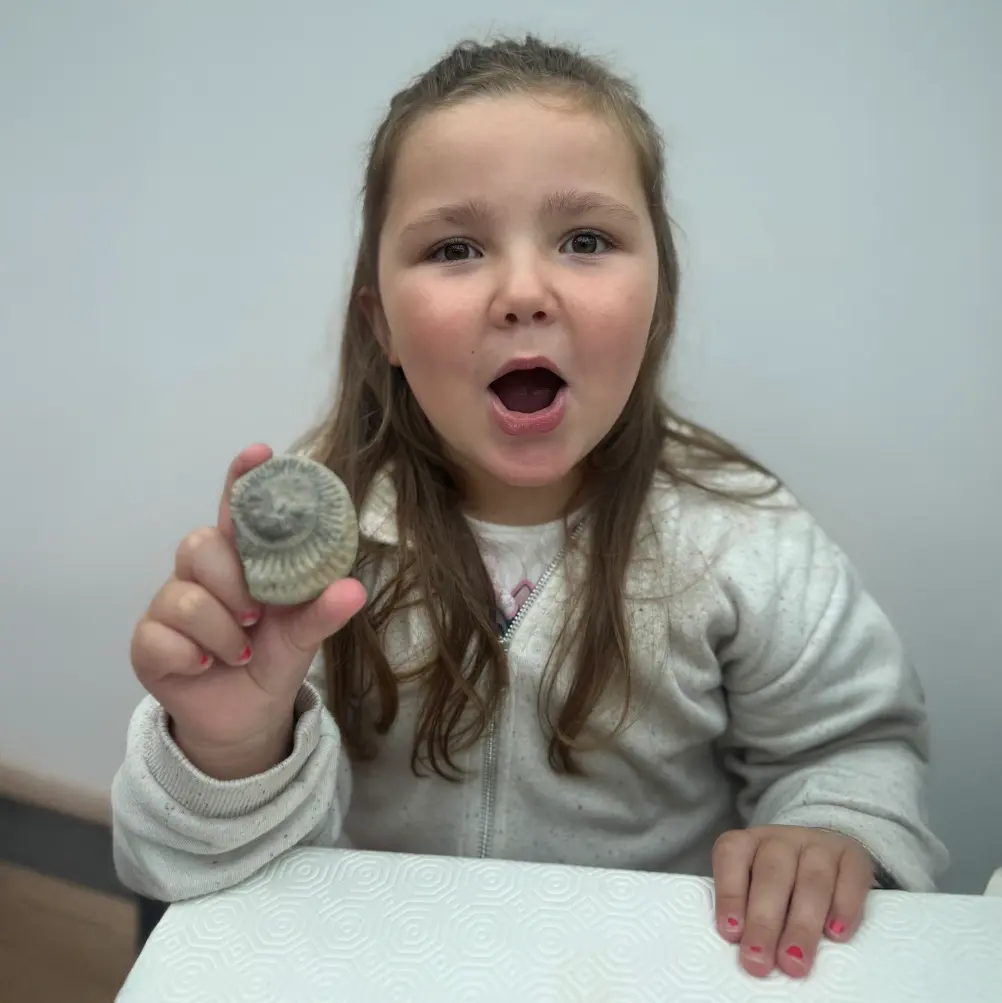
Hattie made an extraordinary discovery that perfectly illustrates why rockhounding captivates children.
When turned over, her seemingly ordinary pebble revealed its secret:
An ammonite fossil! These spiral-shelled marine creatures lived between 240 and 66 million years ago, becoming extinct alongside the dinosaurs when an asteroid impacted Earth. Finding fossils transforms children from casual observers into genuine paleontologists.
Where to Take Your Young Rockhounds
Based on my experience leading school trips and family geology adventures, here are proven locations for inspiring young rockhounds:
Cave Centers and Geological Sites:
- Ingleborough Caves in Yorkshire offer underground geological wonders that showcase limestone formations and fossil deposits. Read about our educational visit here
- Stump Cross Caverns in North Yorkshire provide guided tours perfect for families, explaining cave formation and local geology in child-friendly terms. Visit their website
Educational Resources for Rockhound Families
For parents wanting to extend learning at home, I recommend quality geological resources. Search for “Curiosity Box Rocks and Fossils” to find expertly curated collections designed specifically for young learners. Or click here to buy the book

Starting Your Family’s Rockhound Journey
Begin with your own garden or local park. Encourage children to observe closely, ask questions, and build their own collections. Every rock has a story spanning millions of years – helping children discover these stories builds scientific thinking that lasts a lifetime.
Remember, the best rockhounds aren’t those with the most expensive equipment, but those with the keenest curiosity about the world beneath their feet.
